- What Is Military Contract Manufacturing?
- The Strategic Role of Contract Manufacturing in Modern Defense
- Core Capabilities Prime Defense Contractor Companies Look to Outsource
- Navigating DoD Compliance: The Absolute Price of Entry
- How Military Manufacturing Partners Mitigate Supply Chain Risk
- How to Vet a Military Contract Manufacturing Partner
- Building Stronger Defense Programs with NAMF
- Frequently Asked Questions
Key Takeaways
- Defense contractor companies outsource complex fabrication to specialized partners so they can scale DoD production without the capital cost of building it in-house.
- A true military manufacturing partner proves itself through ITAR, DFARS, AS9100D, NADCAP, and CMMC compliance, not AS9100 certification alone.
- The right manufacturing partner cuts supply chain risk by managing sub-tier suppliers, cybersecurity, and quality assurance on the prime’s behalf.
The defense industrial base is under more pressure than it has faced in decades. Geopolitical tension, a compressed weapons-modernization timeline, and a Department of Defense (DoD) that now rewards speed as much as precision have created one unforgiving reality. Defense contractor companies that cannot scale production quickly lose contracts to the ones that can. Meeting a DoD delivery date takes more than sharp internal engineering. It takes a supply chain that is resilient, compliant, and ready to flex the moment a program accelerates.
That reality is why so many prime and Tier 1 defense contractor companies have rethought how they build things. Instead of trying to manufacture every bracket, chassis, and enclosure in-house, they hand complex fabrication work to specialized military contract manufacturers who already carry the certifications, the equipment, and the process knowledge the work demands. This is not simple capacity offloading. It is a deliberate strategy: lean on Tier 2 and Tier 3 manufacturing partners to close engineering gaps, manage regulatory complexity, and absorb supply chain risk that would otherwise land squarely on the prime.
This guide walks through why that shift happened, what defense contractor companies actually look to outsource, which compliance frameworks separate a real military manufacturing partner from a generic machine shop. How those partners manage risk and how to vet one before handing over a program. Every claim here is grounded in current DoD guidance, published industry research, and the kind of program experience NAMF’s own engineering and quality teams have accumulated over six decades of defense work.
Oversight bodies feel this pressure too. The Defense Contract Management Agency (DCMA) monitors contractor performance on behalf of the DoD, and visibility into the lower tiers of a prime’s supply chain is a recurring theme in how the government evaluates program risk. A prime that cannot see three or four tiers down its own supply chain has a genuine blind spot, and that blind spot is exactly what a well-chosen contract manufacturing partner is meant to close.
What Is Military Contract Manufacturing?
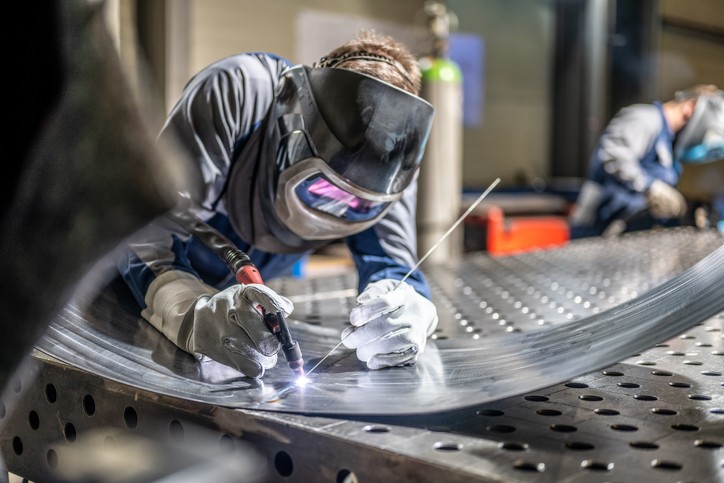
Military contract manufacturing is the practice of a defense prime or subcontractor outsourcing the fabrication of parts, sub-assemblies, or components to a specialized manufacturer that meets DoD-specific requirements for quality, security, and material traceability. Unlike standard commercial contract manufacturing, it requires certifications such as AS9100D and NADCAP, strict compliance with ITAR and DFARS, and, increasingly, alignment with the Cybersecurity Maturity Model Certification (CMMC) framework.
For defense contractor companies, this arrangement solves two problems at once. It gives primes access to niche processes and equipment they would otherwise have to build from scratch. It shifts a meaningful share of regulatory and quality risk onto a partner whose entire business model is built around meeting those standards. A manufacturer that only handles commercial work simply has not built that infrastructure, which is why the defense sector treats commercial and military contract manufacturing as two different disciplines rather than variations on the same service.
The distinction matters even more once a part carries a DoD contract number. A commercial shop can ship a part that is dimensionally perfect and still fail a program audit because it cannot prove where the raw material came from, who touched the drawing, or how the process was controlled. Military contract manufacturing exists specifically to close that gap between “the part is good” and “the part is provably, documentably good.”

The Strategic Role of Contract Manufacturing in Modern Defense
Historically, many prime defense contractor companies leaned on vertical integration, trying to control every stage of the manufacturing lifecycle inside their own walls. Recent supply chain disruptions exposed how fragile that model can be, and the industry has spent the last several years correcting for it.
Why Vertical Integration Stopped Working
According to Deloitte’s Aerospace and Defense Industry Outlook, agility and supply chain resilience, not sheer manufacturing capacity, are now the primary drivers of growth across the sector. That is a meaningful shift from a decade ago, when primes competed largely on engineering talent and program pricing.
Scaling internal operations to meet a sudden spike in DoD procurement demands capital, specialized labor, and years of facility build-out. Few primes can absorb that cost every time a program ramps up. A dedicated military manufacturing partner has already made that investment, spread across dozens of clients instead of one program, which is exactly why outsourcing has become the more efficient path forward.
There is also a talent dimension to this shift. Skilled CNC machinists, certified welders, and NADCAP-trained process technicians are in short supply across the manufacturing sector as a whole. A prime that tries to staff an internal military-grade fabrication shop is competing for the same limited labor pool as every specialized contract manufacturer in the country, usually without the recruiting infrastructure or training pipeline. A dedicated manufacturer has already built over years of steady defense work.
How Outsourcing Frees Primes to Focus on Core Systems
By partnering with a specialized contract manufacturer, a prime can redirect its own engineers toward what actually differentiates its business: systems integration, software, sensor fusion, and next-generation research and development. A DoD report on securing defense-critical supply chains made this point directly, noting that a robust sub-tier manufacturing base is now considered a national security asset, not just a vendor convenience.
Prime contractors are not simply looking for cheaper labor. They are seeking partners who function as a seamless extension of their own manufacturing floor, capable of absorbing complex technical requirements without slowing the program down. That distinction matters. A job shop that quotes a print and machines to spec is a vendor. A partner that flags a tolerance issue before it becomes a failed first article or proposes a better finishing method for a corrosive environment is functioning as an extension of the prime’s own engineering team.
The Ripple Effect Across Munitions, Shipbuilding, and Ground Systems
This shift is not limited to any single platform or program type. Munitions production, naval shipbuilding, and ground vehicle modernization have all seen procurement volumes climb faster than any single prime’s internal capacity can absorb. Defense contractor companies working across these platforms are reaching the same conclusion at roughly the same time: the fastest way to add capacity is to add a qualified partner, not a new building.

Core Capabilities Prime Defense Contractor Companies Look to Outsource
There is a wide gap between routine commercial machining and true military-grade fabrication. Defense contractor companies are not shopping for simple, build-to-print commodity parts. They need partners capable of executing tight-tolerance sub-assemblies that will end up inside radar systems, avionics bays, and vehicle electronics, where a single dimensional error can ground a test article for weeks.
Ruggedized Enclosures and Thermal Management
Modern military electronics depend on ruggedized enclosures, complex chassis, and thermal management systems built to survive vibration, temperature swings, and electromagnetic interference in the field. Fabricating these parts calls for equipment and process control that is too resource-intensive for most primes to keep in-house.
Consider a mobile radar system that needs a lightweight, RF- and EMI-shielded enclosure. Achieving the right thermal conductivity without warping thin-gauge aluminum often points to aluminum dip brazing, a process that fuses multi-part assemblies into a single leak-proof unit under controlled heat and chemistry. Rather than spend millions building an internal brazing facility, a prime will partner with a manufacturer that already runs this niche process alongside the CNC manufacturing capability needed to finish the component and integrate it directly into the final assembly.
Precision CNC Machining and Military Machining
Beyond brazing, defense programs lean hard on precision machining. Horizontal, vertical, and 5-axis CNC work turns raw stock into the tight-tolerance geometries that avionics, weapons systems, and ground vehicles depend on. A manufacturing partner with deep military machining experience understands that a tight tolerance stack-up is not a bonus feature on a quote sheet; it is the baseline expectation on nearly every defense print.
That experience also shows up in how a shop handles difficult materials. Titanium, Inconel, and hardened steel behave very differently under a cutting tool than mild aluminum. A shop that has spent years on military fabrication work has already worked out the feeds, speeds, and tooling that keep those materials in spec instead of scrapping expensive stock. Programming a 5-axis toolpath for a complex housing takes real institutional knowledge, and that knowledge shows up in first-pass yield, not just in a capabilities brochure.
Metal Fabrication, Cutting, and Milling
Sheet metal work matters just as much as machining. Aluminum laser cutting produces the clean, repeatable cuts needed for enclosure panels and structural brackets, and it does so with a kerf tight enough that downstream forming and welding steps do not have to compensate for an inconsistent edge. Programs that need dozens of nearly identical panel variants, each with its own cutout pattern for connectors and vents, depend on that repeatability to keep first-article approval on schedule.
From there, custom metal fabrication covers everything from welded frames to formed chassis components that have to match an exact engineering drawing on the first article every time. Some programs also call for brass milling, particularly for connector housings and RF components, where brass’s conductivity and machinability outperform other metals available for the same application.
Finishing and Surface Protection
Finishing is the step that gets overlooked most often. Painting, coating, plating, and passivation all have to meet specific military standards for corrosion resistance and conductivity. A partner that treats finishing as an afterthought will send back parts that fail salt-spray or conductivity testing months into a program, forcing a costly rework cycle right before a delivery deadline.
Taken together, these processes define what metal fabrication capabilities look like in the defense space. It is not a single machine or a single certification. It is a full toolkit of manufacturing equipment and process expertise that a prime can plug directly into their assembly line, without stitching together five separate vendors to get one finished part.
Assembly, Integration, and Testing Support
Many programs need more than a finished part; they need a sub-assembly that has already been mechanically and electrically integrated before it ever reaches the prime’s own floor. A manufacturing partner that offers light assembly, wire harness routing, and functional testing under one roof removes an entire hand-off from the program, along with the paperwork and lead time that hand-off usually adds.
This matters most for programs with a tight qualification schedule. If a sub-assembly fails environmental or vibration testing at the prime’s facility, tracing the root cause back to a specific vendor and process step can take weeks when four different companies touched the part along the way. When one manufacturing partner owns fabrication, finishing, and initial testing, that same root-cause investigation usually takes days instead because one team already has the full process history in hand.

Navigating DoD Compliance: The Absolute Price of Entry
In defense manufacturing, technical skill means nothing without regulatory compliance. For defense contractor companies, compliance is not a competitive advantage; it is the baseline cost of entry, and it is the filter that separates true military manufacturing partners from generic job shops.
ITAR
The International Traffic in Arms Regulations (ITAR) govern who can access technical drawings, specifications, and manufacturing data tied to defense articles. A compliant partner builds physical and digital safeguards around that information as a matter of course, not as an afterthought bolted on after winning a contract. That includes controlling foreign national access to drawings, securing physical facilities, and training staff on what can and cannot leave the building.
Violating ITAR is not a paperwork slap on the wrist. Penalties can include significant fines and, in serious cases, criminal charges, which is exactly why primes vet a subcontractor’s export-control program as closely as their machining capability. A partner that cannot explain its ITAR registration status in a single, confident sentence is not ready for a defense program, regardless of how good its shop floor looks on a tour.
AS9100D and NADCAP
A generic manufacturer might hold AS9100 certification and still produce solid parts, but that alone does not prove they can handle sensitive defense work. AS9100D validates a manufacturer’s quality management system specifically for aviation, space, and defense, covering risk management, configuration control, and full product traceability from raw material to finished part.
NADCAP goes a step further, independently certifying special processes such as welding, heat treating, and dip brazing. Where AS9100D looks at the manufacturer’s overall quality system, NADCAP confirms that the underlying chemistry and physics of a specific process actually meet aerospace and defense standards, audited by an independent third party rather than self-declared by the manufacturer itself.
DFARS and Specialty Metals Tracing
The Defense Federal Acquisition Regulation Supplement (DFARS) includes strict rules on specialty metals, requiring that raw material used in defense components be melted or produced in the United States or a qualifying country. A capable defense manufacturing partner tracks every heat lot back to its source, closing the door on counterfeit material and reducing exposure to geographic sourcing restrictions that could otherwise disqualify an entire batch of parts.
This tracing requirement sounds like a paperwork exercise until a program gets audited. A manufacturer that cannot produce a clean chain of custody for its raw material puts the prime’s entire contract at risk, regardless of how well the part itself was machined. Government auditors care less about how a part looks and more about whether its paper trail holds up, which is a mindset shift many commercial shops never fully make.
Why This Compliance Stack Cannot Be Shortcut
None of these frameworks exist in isolation. ITAR protects the information, AS9100D and NADCAP validate the process, and DFARS validates the material. A partner that is strong on one and weak on another has not actually solved the problem; they have just moved the risk to a different part of the file. Defense contractor companies that understand this rarely accept a partial compliance story, no matter how compelling the pricing looks on paper, because a program audit will eventually find the gap that a sales pitch glossed over.
Program managers who have lived through a failed audit tend to describe the same lesson: compliance documentation is not something to assemble after a part ship. Defense contractor companies get the most value from a manufacturing partner when that documentation is built into the process from the very first article, not reconstructed under pressure once a customer or a government auditor asks for it.

How Military Manufacturing Partners Mitigate Supply Chain Risk
Outsourcing introduces risk of its own. If a subcontractor misses a delivery date or ships a non-compliant part, the entire program schedule slips, and the prime is the one who answers for it. Military manufacturers built for defense work manage the complexity of the lower-tier supply chain on the prime’s behalf, rather than passing that burden upstream.
Cybersecurity and CMMC Readiness
The DoD’s push to protect Controlled Unclassified Information (CUI) across the defense industrial base is no longer theoretical. The CMMC final rule took effect in November 2025, and the program is now in its first phase, with contracting officers selectively requiring Level 1 or Level 2 self-assessments on new solicitations. Phase 2 extends that to third-party Level 2 certification, and by 2028, nearly every DoD contract that touches Federal Contract Information or CUI will need to specify a CMMC level.
That phased timeline means a manufacturing partner’s cybersecurity maturity is quickly becoming as important as its equipment list. A prime that signs a multi-year program with a partner who is not tracking their CMMC status is signing up for a compliance scramble somewhere down the line, likely at the worst possible moment in the schedule. Defense contractor companies should treat a partner’s CMMC roadmap as a standing agenda item, not a one-time question asked during onboarding.
Quality Assurance, Traceability, and FAI
Dedicated military contract manufacturing partners run quality protocols that most commercial shops never touch: lot traceability down to the individual heat lot and First Article Inspections (FAI) that meet AS9102 standards. That level of documented assurance lets a prime receive parts straight into their stockroom instead of running redundant incoming inspections on every shipment, which saves real time across a program’s life cycle.
FAI matters more than it might sound. A properly documented first article confirms that every dimension, material property, and process step on a drawing has actually been verified, not assumed, before a production run begins. Skipping or rushing this step is one of the most common ways a program discovers a systemic defect only after dozens of parts have already shipped.
Managing the Sub-Tier Supply Chain
A strong contract manufacturer also manages its own supplier base, qualifying and auditing the raw material mills, platers, and finishers it depends on. That means the prime is not exposed to a fourth- or fifth-tier vendor they have never vetted directly. This is one of the most underrated manufacturing solutions a partner can offer: fewer unknown links further down the chain and fewer surprises when a program hits its most schedule-sensitive phase.
Program Management and On-Time Delivery
Risk mitigation also comes down to plain program management. A manufacturing partner that tracks lead times on raw material, plans capacity ahead of a program’s ramp, and communicates a schedule risk early gives the prime time to react. Defense contractor companies that have been burned by a late subcontractor tend to weigh communication and program discipline just as heavily as certifications when choosing a new partner, and for good reason: a certificate does not fix a missed delivery date.
This is also where the size and structure of a manufacturing partner start to matter. A very small shop may have excellent people but limited surge capacity if two clients both ramp up at once. A partner with multiple facilities and cross-trained staff can shift capacity between programs as priorities change, which is precisely the kind of flexibility defense contractor companies need when a DoD program’s schedule moves up unexpectedly.
How to Vet a Military Contract Manufacturing Partner
Choosing the wrong partner can cost a program months and put an entire contract at risk. Before signing a statement of work, defense contractor companies should confirm a potential partner on each of the following.
- Active certifications. Confirm current AS9100D, NADCAP, and ITAR registration status directly, rather than accepting a certificate that expired two audit cycles ago.
- CMMC status. Ask where the partner stands in the CMMC Program Office’s phased rollout and whether that status is verifiable through the Supplier Performance Risk System.
- Process depth. Look for evidence of the specific process a part actually needs, whether that is dip brazing, 5-axis CNC, or laser cutting, rather than a generic “we can machine anything” claim.
- Material traceability. Ask how the partner documents heat lots and specialty metal sourcing under DFARS, and request a sample traceability packet before committing to a program.
- Facility and capacity. Tour the floor, or ask for recent photos and equipment lists, to confirm the partner actually owns the machines their capabilities page describes.
- Track record with primes. A manufacturer that has already delivered to other defense contractor companies understands program cadence and DoD documentation requirements without a learning curve on the prime’s dime.
Working through this list before a program starts, rather than after a delivery slips, is the difference between a partner and a liability. It also gives a procurement team a defensible answer when an internal audit asks why a particular subcontractor was chosen.
Building Stronger Defense Programs with NAMF
As defense contractor companies face mounting pressure to deliver advanced systems quickly and securely, the choice of manufacturing partner becomes a genuine strategic decision, not a line item buried in a purchase order. New Age Metal Fabrication (NAMF) has spent more than 60 years building the compliance infrastructure and process depth that top defense organizations require.
NAMF bridges the exact capability gaps prime contractors face, combining deep regulatory compliance with specialized manufacturing processes under one roof: horizontal, vertical, and 5-axis CNC machining, dip brazing, laser cutting, painting, and coating, all supporting the ruggedized enclosures and thermal management components modern military programs demand. That single-point-of-contact model, handling everything from material sourcing through final delivery out of facilities in Fairfield, New Jersey, and Ronkonkoma, New York, means a program does not have to coordinate five separate vendors to get one finished assembly out the door.
NAMF holds ITAR registration along with AS9100D, NADCAP, and NAVSEA credentials, so every component ships with the documentation a defense program actually needs, not paperwork assembled after the fact. Six decades of working exclusively with defense and aerospace clients has also shaped how NAMF’s engineering team approaches a new print: not as a one-off quote, but as the start of a relationship that has to hold up across an entire program’s life cycle, including whatever compliance requirement comes next.
That focus shows up in the range of programs NAMF supports, from radar and avionics enclosures to naval fabrication work tied to NAVSEA requirements and ground vehicle components that have to survive years of field conditions. Rather than treating each request for a quote as an isolated transaction, NAMF’s engineering team looks at how a given part fits into the broader program, flagging design-for-manufacturability issues and material sourcing risks before they turn into a missed delivery date.
When supply chain reliability and technical depth are non-negotiable, partnering with an established military manufacturing provider built specifically for defense work is the clearest path to program success for defense contractor companies at every tier.
Ready to De-Risk Your Next Defense Program?
Talk to NAMF’s manufacturing engineers about your specifications, timeline, and compliance requirements before your next RFQ goes out. A short conversation now can save weeks of rework later.