Key Takeaways
- Defense contractor companies outsource to scale faster and focus on core systems work.
- Niche processes like dip brazing are costly to build and run in-house.
- Compliance with ITAR, DFARS, AS9100D, NADCAP, and CMMC separates true defense partners from generic shops.
Defense contractor companies outsource complex parts to expert partners so they can scale faster, meet Department of Defense (DoD) rules, and lower supply chain risk. It is now a core part of how defense programs get built.
Global tensions and fast-moving military technology have made speed a must. Prime contractors can’t build every part in-house and still hit DoD deadlines. So they turn to Tier 2 and Tier 3 partners for military contract manufacturing that fills engineering gaps, handles tough regulations, and protects the supply chain.
Why Do Defense Contractor Companies Outsource Manufacturing?
Defense contractor companies outsource to scale production without building new facilities. Partners already have the equipment, trained people, and compliance systems in place.
For years, many primes relied on vertical integration. They tried to control every step of production under one roof. Recent supply chain disruptions exposed the weak spots in that model. Deloitte’s Aerospace and Defense Industry Outlook points to agility and supply chain resilience as major drivers of industry growth.
Scaling in-house takes heavy capital, long training, and years of facility work. Outsourcing skips those bottlenecks. It also frees primes to focus on what they do best: systems integration, software, and next-generation research and development.
The DoD has also stressed the need for a strong sub-tier manufacturing base in its report on securing defense-critical supply chains. Primes want partners that act as an extension of their own shop floor, not basic job shops.
What Do Defense Contractor Companies Outsource?
They outsource complex, tight-tolerance sub-assemblies, not simple commodity parts. Military-grade fabrication is a different world from standard commercial machining.
Modern military tech runs on advanced electronics. Those electronics need ruggedized enclosures, electronic chassis, and thermal management systems. These parts must handle extreme heat, heavy vibration, and electromagnetic interference. Many call for custom metal fabrication that is too costly and time-heavy for primes to keep in-house. Think of the special tooling, trained crews, and strict inspection steps each part needs.
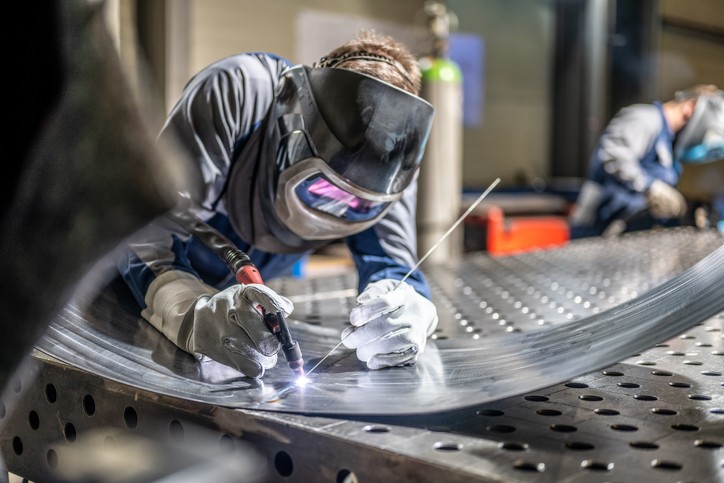
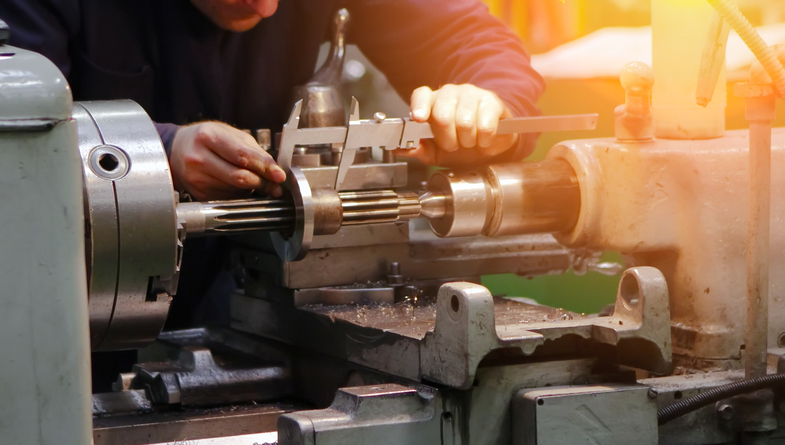
Material choice matters just as much. Fabrication of stainless steel and aluminum parts demands tight process control, skilled welders, and detailed records for every batch of metal. Close tolerances also push work toward shops with advanced CNC milling and precise inspection tools.
Example: Dip Brazing for RF/EMI-Shielded Enclosures
Picture a lightweight, RF/EMI-shielded enclosure for a mobile radar system. It needs strong thermal conductivity and structural integrity. But thin-gauge aluminum can warp under heat.
The design often calls for dip brazing. This process joins multi-part assemblies into one leak-proof unit. Building an in-house dip brazing line can cost millions.
So the prime partners with a manufacturer that already offers aluminum dip brazing services. That partner also does the precision machining to finish the part. The prime gets a finished component that is ready for the final assembly line.
What Compliance Rules Must Military Manufacturers Meet?
Military manufacturers must meet ITAR, DFARS, AS9100D, NADCAP, and CMMC requirements. For defense contractor companies, these rules are the price of entry. Technical skill alone is not enough.
A generic commercial fabricator may hold an AS9100 certification and make quality parts. But it often lacks the systems to protect sensitive defense data and materials. A true partner builds its whole operation around DoD rules. That is what sets real military manufacturing apart from a general machine shop.
Here is what each standard covers:
- ITAR: The International Traffic in Arms Regulations control who can see drawings and production data. A compliant partner keeps your designs safe, both in the files and on the shop floor.
- AS9100D and NADCAP: AS9100D proves a strong quality system. NADCAP checks special processes like welding, heat treating, and dip brazing.
- DFARS: The Defense Federal Acquisition Regulation Supplement sets rules for specialty metals. Partners must trace raw materials and source them only from qualifying countries. This keeps fake materials out of the supply chain.
How Do Contract Manufacturers Reduce Supply Chain Risk?
They manage the lower-tier supply chain for the prime, enforce cybersecurity controls, and document every part. If a sub-tier supplier ships late or sends a non-compliant part, the whole DoD program schedule is at risk. A strong partner takes that burden off the prime.
Cybersecurity is a big piece of this. The DoD is focused on protecting Controlled Unclassified Information (CUI) across the defense industrial base. CMMC requirements are now phasing into DoD contracts, so primes expect partners to show strong cyber habits. A secure partner guards government drawings and specs. That way, the supply chain is never the weak link.
Quality checks matter just as much. Dedicated defense partners trace every part back to its material heat lot. They also run First Article Inspections (FAI) that meet AS9102 standards. This paper trail matters to agencies like the Defense Contract Management Agency (DCMA), which oversees defense contracts. It also lets primes send parts straight to the stockroom. No extra incoming inspections are needed.
Building Stronger Defense Programs With NAMF
As defense contractor companies face growing pressure to deliver systems fast and securely, the right partner becomes a real edge. NAMF has more than 50 years of experience and is ITAR, AS9100D, NADCAP, and NAVSEA certified.
From laser cutting to dip brazing and finishing, our metal fabrication services deliver the ruggedized enclosures and thermal management parts modern military programs demand. Every part ships with the documentation and traceability your program requires.
NAMF offers turnkey manufacturing solutions that cover everything from sourcing materials to final fabrication. Your team stays focused on integration while we handle the build at our New Jersey and New York facilities.
When supply chain reliability is non-negotiable, a dedicated military partner is the clearest path to program success. Consult our engineers on your next program to streamline production and de-risk your supply chain.
Ready to De-Risk Your Next Defense Program?
Talk to NAMF’s engineers about your drawings, timelines, and compliance needs. We will help you scale production without adding risk.