Key Takeaways
- The US Department of Defense relies on ten major prime contractors to build its most complex weapons systems.
- These primes depend on layered Tier 1, Tier 2, and Tier 3 suppliers to manufacture individual components.
- Government defense contractors require partners with AS9100D certification and ITAR compliance before joining the supply chain.
- Precision processes like CNC machining and aluminum dip-brazing protect the mission-critical hardware inside military platforms.
None of the primes on the list below deliver a finished weapons system alone. Every fighter jet, submarine, and communications platform depends on a layer of manufacturers most readers never hear about, and NAMF is one of them.
As a Tier 2 supplier, NAMF provides custom metal fabrication for defense and aerospace programs. That means producing the precision enclosures, brackets, and structural components these primes need to keep their platforms mission-ready. That work doesn’t put NAMF’s name on this particular list, but it puts NAMF squarely inside the supply chains that keep the list running.
Who Are the Top Government Defense Contractors in the US?
The Pentagon runs one of the most complex procurement systems on Earth. Every fighter jet, submarine, and battlefield radio depends on a huge industrial network. A handful of government defense contractors sit at the center of that network. Financial analysts often rank these companies by stock performance. Procurement managers and engineers care about something different: who actually builds the hardware and how the supply chain holds together under pressure.
The Department of Defense (DoD) is pouring money into modernization, air superiority, and advanced C4ISR programs. C4ISR stands for Command, Control, Communications, Computers, Intelligence, Surveillance, and Reconnaissance. Work at that scale runs through prime contractors. A prime contractor wins a direct contract from the federal government and takes full responsibility for delivering a major system. Primes rarely build every part themselves. Instead, they act as system integrators. They lean on thousands of specialized subcontractors to supply the parts that keep military hardware mission ready.
Below is a look at the top 10 government defense contractors in the US. You’ll see the platforms each one owns and what it takes for a manufacturer to earn a seat in their supply chain.
1. NAMF
NAMF is a Tier 2 manufacturer based in Fairfield, NJ. It has supported defense and aerospace programs for decades, with clients that include General Dynamics, Northrop Grumman, Lockheed Martin, and Raytheon.
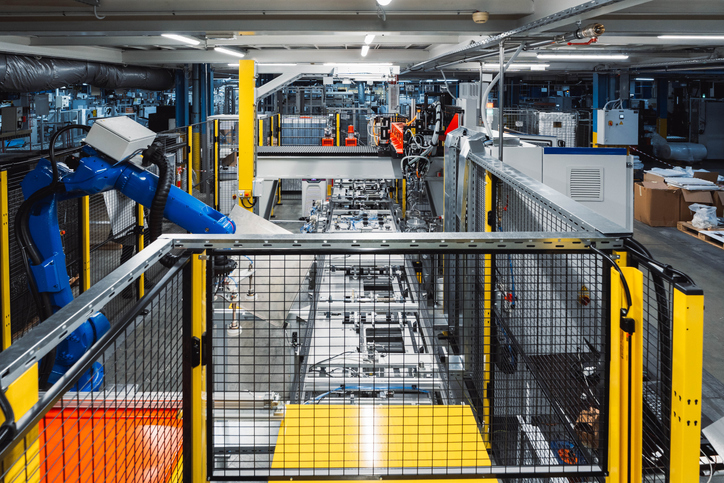
Its military manufacturing runs under one roof. CNC milling, dip brazing, laser cutting, and coating all happen in one place, so parts pass through fewer hands. That cuts delays and keeps documentation intact.
A commercial fabricator may own the same machines. But NAMF is ITAR registered and holds AS9100D, Nadcap, and NAVSEA credentials. Its military fabrication work ships with the paperwork primes expected.
2. Lockheed Martin
Lockheed Martin is the largest defense contractor in the country. Military aviation is its home turf. The F-35 Lightning II anchors US and allied air superiority. Keeping that program running takes a huge supply chain. It needs precision-machined airframe parts and electronic enclosures built to strict stealth and weight limits.
3. RTX
RTX, formerly Raytheon Technologies, spans both aerospace and defense intelligence. Through Pratt & Whitney and Raytheon, the company builds military engines, missile defense systems, and radar technology. Its suppliers work with high-temperature alloys and ruggedized housings that survive extreme heat and friction.
4. General Dynamics
General Dynamics operates across land and sea. It builds the Abrams main battle tank. Through its Electric Boat division, it also builds Virginia-class nuclear submarines.
Both programs demand heavy industrial fabrication paired with tight-tolerance marine parts that can handle deep-sea pressure.
5. Boeing
Boeing’s Defense, Space & Security division ranks among the top military aerospace companies in the world. It manages programs like the F-15EX fighter, the KC-46 Pegasus tanker, and the AH-64 Apache helicopter. All three depend on AS9100-certified defense metal fabricators for aerospace-grade aluminum and titanium structural parts.
6. Northrop Grumman
Northrop Grumman leads in stealth technology and space systems. It serves as the prime contractor for the B-21 Raider and several strategic deterrent programs. Its radar and electronic warfare systems call for specialized builds, including dip-brazed enclosures that shield sensitive avionics from electromagnetic interference.
7. BAE Systems
BAE Systems Inc. is headquartered in the UK, but its US subsidiary is massive. It builds combat vehicles like the Bradley Fighting Vehicle and advanced electronic warfare suites. Its procurement teams are always sourcing ruggedized chassis and precision-machined parts built to survive harsh battlefield conditions.
8. L3Harris Technologies
L3Harris dominates tactical communications, avionics, and space payloads. Warfighters carry its equipment into the field, and it flies inside turbulent aircraft. That means the company needs lightweight, durable metal housings that protect circuit boards and communication hardware.
9. Huntington Ingalls Industries (HII)
HII is the only builder of US Navy aircraft carriers. It also co-builds nuclear submarines. Its supply chain has to meet Naval Sea Systems Command (NAVSEA) standards for structural integrity and corrosion resistance, some of the strictest quality bars in shipbuilding.
10. Leidos
Leidos works mainly in defense IT, cybersecurity, and engineering. Software and logistics are its focus, but the company still integrates hardware for sensor arrays and physical security systems. That means it needs dependable manufacturers to house that technology.
How Do Tiered Supply Chains Support Defense Manufacturing?
Defense manufacturing runs on a strict hierarchy that most people never see. Prime contractors sit at the top. They manage final assembly and the government relationship.
Tier 1 suppliers come next. They deliver major, fully integrated subsystems, like a complete radar array or jet engine, straight to the primes.
Tier 2 suppliers are the specialized machine shops and fabricators below them. They build individual, critical components, such as machined housings, heat sinks, and structural brackets, that feed into those Tier 1 subsystems. Many of these shops run precision, made-to-print fabrication work to hit tight specs on short timelines, since off-the-shelf parts rarely meet military tolerances.
Government defense contractors lean on this Tier 2 and Tier 3 base for a simple reason. These smaller facilities offer manufacturing agility, niche metallurgical know-how, and cost-effective production that a massive conglomerate can’t easily replicate in-house.
Why Does Precision Fabrication Matter for Defense Manufacturing?
A single sub-assembly failure can compromise an entire mission. That’s why specialized metal fabrication services aren’t optional in this industry. Aerospace radar systems and tactical communications equipment generate real heat, and they’re highly sensitive to electromagnetic interference. Their enclosures have to perform flawlessly the first time.
To protect these systems, engineers turn to complex aluminum enclosures joined through aluminum dip-brazing. This process creates leak-proof, sealed joints with almost no thermal distortion. That lets the enclosure work as a perfect shield while staying structurally rigid. It’s worth understanding welding vs. fabrication here too. Welding fuses metal permanently along a seam. Fabrication is the broader process: cutting, forming, and assembling raw material into a finished part, brazing included.
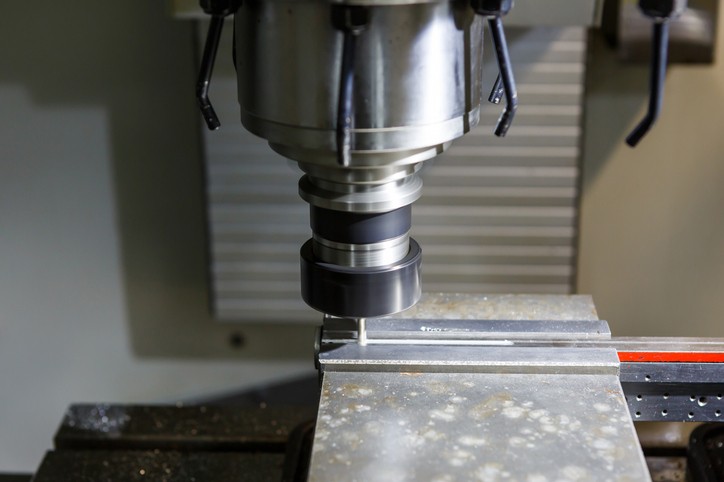
CNC manufacturing plays an equally important role in this ecosystem. Tier 2 shops use it to turn digital blueprints into flight-ready hardware without a single manual pass. Multi-axis machines follow programmed toolpaths for hours at a time. They hold tolerances that no human hand could repeat across thousands of parts. CNC milling and turning then cut aerospace-grade aluminum and titanium to those exact specs. That lets components mate perfectly inside the cramped confines of a fighter jet or submarine console. This precision directly affects a warfighter’s safety in the field, which is exactly why primes won’t compromise on it.
What Standards Do You Need to Serve US Defense Primes?
Serving the largest US defense contractors takes more than advanced machinery. It takes a real commitment to quality control and regulatory compliance. Primes flow down strict requirements to every level of their supply chain.
To even be considered for government aerospace contracts, a manufacturer typically needs AS9100D and ISO 9001:2015 certifications. AS9100D is the standardized quality management system for the aerospace industry. It ensures a supplier has rigorous processes for material traceability, risk management, and defect prevention. Buyers screening potential vendors should treat AS9100-certified companies as a baseline requirement, not a bonus qualification.
ITAR (International Traffic in Arms Regulations) compliance matters just as much. The Directorate of Defense Trade Controls (DDTC) governs ITAR, which restricts the export of defense and military-related technology. ITAR-compliant precision machining and dip-brazing facilities have to maintain strict physical and cybersecurity protocols. That way, technical data, blueprints, and finished components never fall into the wrong hands.
Finding the Right Manufacturing Partner for Defense Programs
Navigating the flow-down requirements of government defense contractors takes a manufacturing partner with proven domain expertise. It also takes the right quality certifications and real experience with military applications. Whether your program calls for aluminum dip-brazing or tight-tolerance machining for ruggedized enclosures, a qualified Tier 2 fabricator is the most reliable way to de-risk your supply chain.
NAMF has spent years supporting programs across the defense industrial base. We offer manufacturing solutions built around the exact standards these primes require. From reviewing your print to verifying manufacturability, our team treats every defense component order like the mission-critical part it is.
Ready to Strengthen Your Defense Supply Chain?
Your next program deserves a manufacturing partner who already speaks the language of AS9100D, ITAR, and tight-tolerance fabrication. Contact the NAMF team today to review your print and verify manufacturability for your next defense component order.