- What Is CNC Manufacturing in Defense & Aerospace?
- Understanding the Precision Requirements
- Material Selection: What Makes Aerospace Machining Difficult
- CNC Cutting Services in Aerospace Manufacturing
- CNC Mill vs. Lathe: Choosing the Right Process for Aerospace Components
- CNC Rapid Prototyping for Defense Development Programs
- Custom CNC Parts: Meeting Mission-Critical Specifications
- Implementing Rigorous Quality Systems
- Military CNC: Defense-Specific Standards and Compliance
- Moving Forward With the Right CNC Manufacturing Partner
- Frequently Asked Questions
Key Takeaways
- Aerospace CNC manufacturing requires tolerances as tight as ±0.0001 inches, about 40 times tighter than standard precision machining.
- AS9100D, NADCAP, and ITAR compliance are non-negotiable requirements for any defense or aerospace CNC supplier.
- 5-axis CNC technology reduces setup time by up to 92% and is used by over 68% of aerospace and defense manufacturers for high-precision work.
CNC manufacturing in defense and aerospace isn’t just precision machining. It’s about creating components that perform flawlessly in extreme environments where failure isn’t an option.
Modern aircraft contain between 2 and 3 million precision-machined parts. Each one demands rigorous quality control. The margin for error? Effectively zero.
The stakes in this industry are unlike anything else in manufacturing. A tolerance violation that would be acceptable in a consumer product becomes a safety-of-flight issue in an aircraft. A material certification gap that might slide by in industrial manufacturing can disqualify a defense supplier from a contract entirely. The consequences of getting it wrong aren’t measured in customer complaints, they’re measured in mission failures and lives.
We’ve spent decades refining our approach to CNC manufacturing for these critical industries. Here’s what we’ve learned about the practices that separate reliable suppliers from those who can’t meet the standard.
What Is CNC Manufacturing in Defense & Aerospace?
CNC manufacturing, or computer numerical control manufacturing, uses pre-programmed software to control the movement of cutting tools and machinery. In defense and aerospace applications, it’s the backbone of how mission-critical components are made.
The process works by translating digital CAD/CAM designs into precise physical parts. A computer controller sends instructions to the machine, dictating every cut, feed rate, and movement with micron-level accuracy. Unlike manual machining, CNC manufacturing eliminates human variability from the cutting process itself, which is exactly why industries that cannot tolerate failure depend on it.
In aerospace, this means structural airframe parts, engine components, landing gear assemblies, and hydraulic fittings. In defense, it means weapon system housings, guidance components, armored vehicle parts, and communication hardware. Each of these parts must meet engineering drawings to the letter.
What makes CNC manufacturing different in these sectors isn’t just the machines; it’s the entire ecosystem around them. The certifications, the quality systems, the materials expertise, the documentation requirements, and the people who run the programs. That’s the complete picture.
The demand for precision CNC manufacturing in aerospace and defense has grown steadily as platforms have become more sophisticated. Modern fighter aircraft and commercial airliners both push toward lighter structures, tighter clearances, and higher operating temperatures. Every one of those engineering goals puts more pressure on the manufacturing process. The machine shops supplying these programs have to grow along with the requirements: investing in new equipment, new certifications, and new process knowledge continuously.
Understanding the Precision Requirements
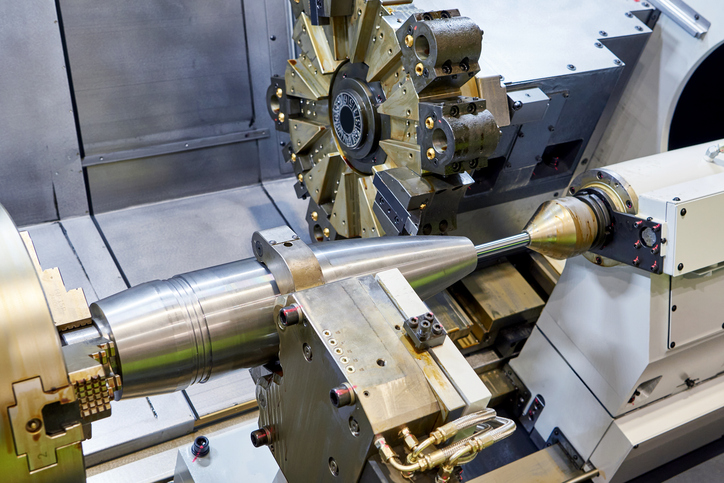
Aerospace and defense components operate under conditions that would destroy standard manufactured parts. High temperatures reach 2,000°F. Pressure variations swing from 0.2 atm to 1.2 atm during flight. Vibration, stress, and environmental exposure test every component continuously.
The tolerance standards reflect these demands. Aerospace CNC manufacturing achieves tolerances within 0.0001 inches, roughly 2.54 micrometers. That’s approximately 40 times tighter than standard precision machining, which typically works with tolerances of ±0.005 inches.
Critical aerospace components often specify tolerances of ±0.013 mm (±0.0005″) or tighter for any dimension affecting safety, performance, or regulatory compliance. Some parts require tolerances measured in microns—a fraction of the width of a human hair.
This level of precision isn’t negotiable. It’s the baseline. If a supplier can’t consistently hold these tolerances across a full production run, they aren’t a viable option for aerospace or defense work.
Meeting these requirements also demands the right measurement infrastructure, not just the right machines. Coordinate measuring machines (CMMs), laser trackers, and optical comparators are standard equipment in serious aerospace CNC manufacturing operations. Inspection isn’t something that happens at the end of the process. It’s woven into every stage, from the first article through final acceptance. The documentation that comes out of inspection is just as important as the part itself, because it’s the objective evidence that the part meets spec.
Material Selection: What Makes Aerospace Machining Difficult
Materials in aerospace and defense CNC manufacturing are chosen for their strength-to-weight ratio and resistance to extreme temperatures. But these same properties make them notoriously difficult to machine. Understanding material behavior is what separates competent shops from truly capable ones.
Titanium Alloys
Titanium alloys are essential for critical engine parts, landing gear, and fasteners. They offer high strength and low density. But titanium’s low thermal conductivity, 7.2 W/m·K, causes significant tool wear and drives up manufacturing costs. The material heats up quickly during machining, and its hardness, more than twice that of normal steels, demands more force from the cutter, holder, and machine.
Aerospace-grade titanium ranges from $20 to $60 per pound, making material waste costly. Proper tooling selection and process control aren’t just quality concerns; they’re financial ones.
Nickel-Based Superalloys
Nickel-based superalloys like Inconel 718 are essential for turbine blades and exhaust systems that must withstand extreme heat and pressure. These materials demonstrate excellent fatigue resistance and maintain strength at elevated temperatures. They also create substantial machining challenges due to work hardening and heat generation during cutting.
Aluminum Alloys
Aluminum alloys, 7075 and 6061 in particular, remain widely used for structural components, fuselage ribs, and wings. They’re lightweight and more machinable than titanium or Inconel but still require careful process control to maintain dimensional accuracy. For development programs and early-stage builds, aluminum prototype machining is often the fastest path from design to testable hardware. It’s cost-effective, quick to machine, and easy to iterate. Thus, making it the go-to choice when teams need to validate a design before committing to harder, more expensive materials.
The rule of thumb is straightforward: match your tooling strategy to material properties. Titanium requires slower cutting speeds, specialized tool coatings, and aggressive coolant strategies. Inconel demands rigid setups and constant monitoring for tool wear. Aluminum allows faster machining but requires attention to chip evacuation and surface finish.
CNC Cutting Services in Aerospace Manufacturing
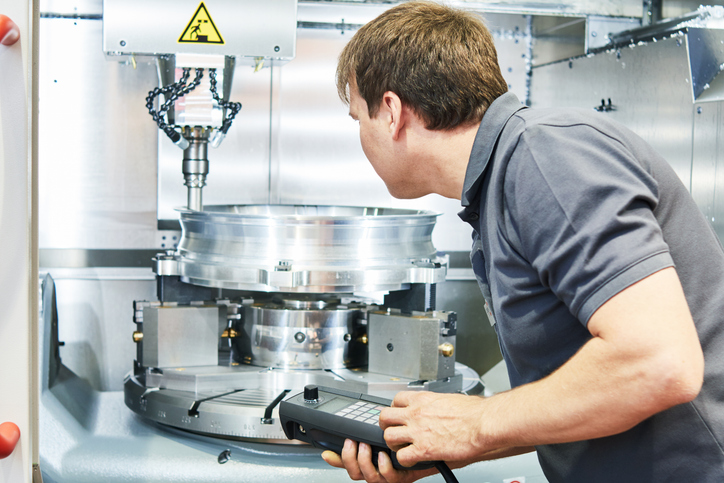
Precision CNC cutting services are the foundation of any aerospace machining program. Whether you’re producing structural brackets, engine casings, or electronic housings, the cutting process determines part accuracy, surface finish, and overall structural integrity.
In aerospace and defense CNC manufacturing, cutting operations must be tightly controlled from start to finish. This includes selecting the right cutting method for the material, establishing appropriate feeds and speeds, and verifying dimensional accuracy at every stage. CNC cutting services that specialize in aerospace-grade materials bring the process knowledge and tooling infrastructure that general job shops simply don’t have.
For defense contractors and aerospace OEMs, working with a dedicated CNC cutting services provider means better consistency across production runs, tighter tolerances on complex features, and documentation that meets AS9100D and ITAR requirements. It’s not just about having the right machine—it’s about having the right process behind every cut.
CNC Mill vs. Lathe: Choosing the Right Process for Aerospace Components
One of the most practical decisions in aerospace CNC manufacturing is choosing the right machine type for the job. Understanding the difference between a CNC mill vs. lathe determines whether a part is made efficiently, accurately, and to spec.
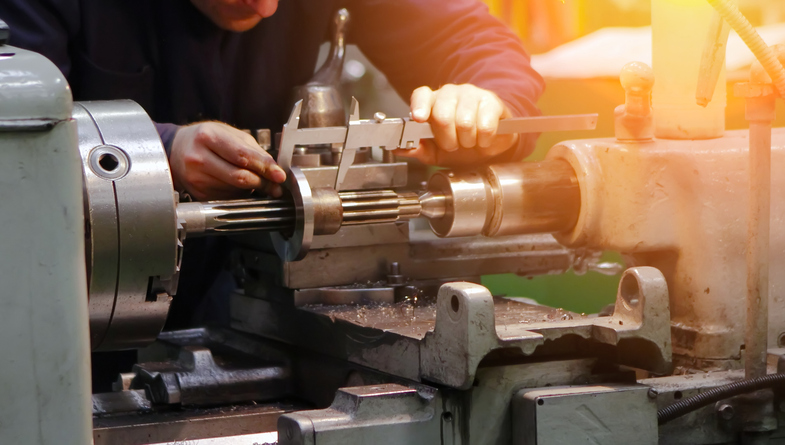
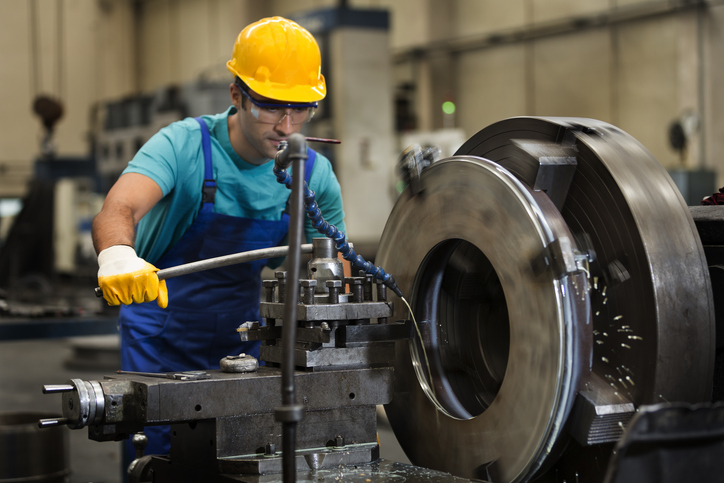
A CNC lathe works by rotating the workpiece while a stationary cutting tool removes material. It’s ideal for cylindrical components—shafts, bushings, rings, nozzles, and threaded fasteners. In aerospace and defense manufacturing, lathes handle many of the round, symmetrical parts that make up engine assemblies and structural hardware.
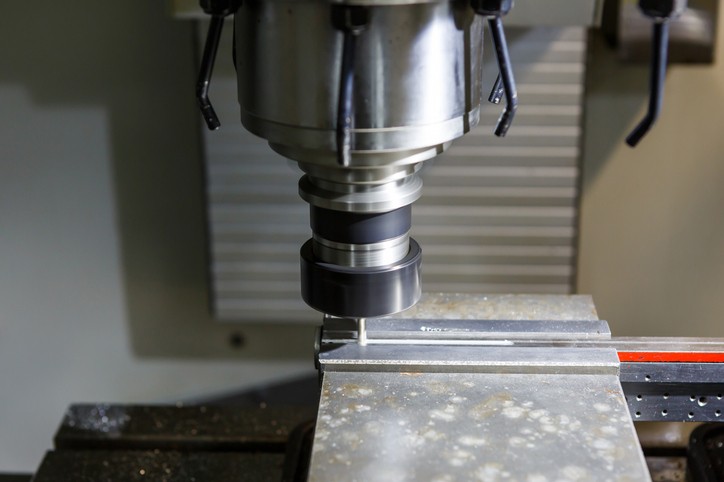
A CNC mill works differently. The workpiece stays fixed while the cutting tool rotates and moves in multiple directions. Mills excel at prismatic parts: brackets, housings, plates, and complex geometric shapes. Multi-axis milling is where the real complexity happens in aerospace manufacturing.
Many aerospace parts require both operations. A CNC lathe and milling machine can be combined in a single turning-milling center, which machines complex parts in one setup. This is critical for aerospace work because every time a part is moved to a different machine, there’s a risk of introducing positional error. Combining operations on a single CNC lathe and milling machine reduces setups, improves accuracy, and shortens lead time. All factors that matter enormously in defense production environments.
Understanding when to use each machine type and when to combine them is part of the engineering judgment that experienced aerospace CNC manufacturing shops develop over years of hands-on work.
Leveraging 5-Axis CNC Technology
5-axis CNC manufacturing has become essential for aerospace and defense work. The technology produces complex geometries with 40% fewer setups than conventional 3-axis processes.
Over 70% of critical structural and engine components in aerospace and defense require simultaneous multi-axis machining. Nearly 68% of aerospace and defense manufacturers in the US rely on 5-axis CNC systems for high-precision components.
The performance data tells the story clearly. 5-axis systems reduce setup time by up to 92% for complex geometries like turbine blades, lower part count by up to 30% through consolidated designs, reduce rework rates by over 30% in precision applications, and improve surface finish through continuous tool engagement. Dimensional accuracy also improves significantly because the workpiece is repositioned less often.
5-axis machining achieves tolerances in the ±0.01–0.02 mm range, with critical aerospace parts reaching ±0.005 mm. This level of precision supports the creation of lightweight components with optimized geometry, minimizing drag and improving fuel efficiency in finished aircraft.
We’ve invested in 5-axis technology because it directly addresses the complexity our aerospace and defense clients demand. Single-setup machining reduces human error, improves repeatability, and shortens lead times. For custom CNC parts with complex internal features, undercuts, or compound angles, 5-axis machining is often the only viable production path.
CNC Rapid Prototyping for Defense Development Programs
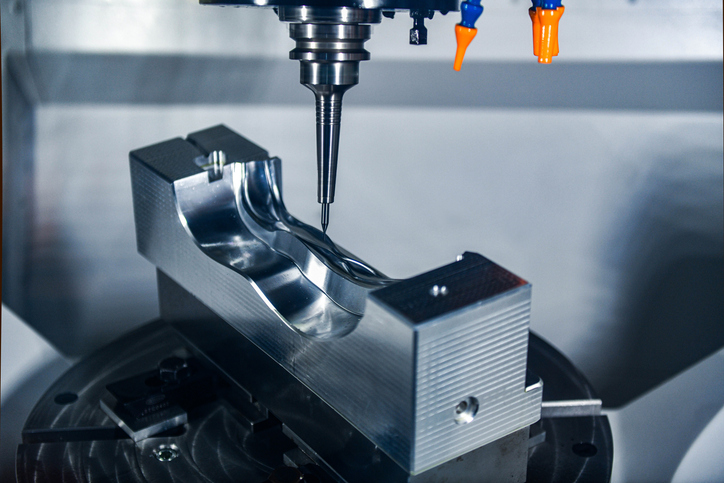
Defense programs move fast, especially in the early development phase. CNC rapid prototyping gives engineering teams the ability to produce functional metal parts quickly, often within days, without the lead times associated with full production tooling.
In aerospace and defense, CNC rapid prototyping means more than just making a part quickly. It means producing a part in the actual engineering material, to actual drawing tolerances, with enough surface finish quality to validate fit, form, and function. A prototype that’s close isn’t good enough when the downstream production parts will be used in a flight system or a weapon platform.
CNC rapid prototyping is particularly valuable during design iteration cycles. When an engineer needs to verify a clearance, test an assembly sequence, or check a load path, a machined metal prototype gives them real-world feedback that simulation alone can’t provide. It also supports supplier qualification; running a first article before committing to production quantities is standard practice in aerospace.
For defense contractors working under compressed timelines, having a CNC manufacturing partner with dedicated rapid prototyping capability means design cycles move faster without compromising the precision required. We routinely support programs from early design validation through production release, which means our team understands both the prototype requirements and the production requirements for the same part.
Custom CNC Parts: Meeting Mission-Critical Specifications
Not every aerospace or defense program needs high-volume production runs. Many programs require custom CNC parts in low-to-medium quantities, sometimes single units for test articles, sometimes short runs for spares or fleet upgrades.
Custom CNC parts in defense and aerospace carry the same documentation, traceability, and quality requirements as full production hardware. A one-off part for a test fixture still needs a material certification. A prototype structural bracket still needs dimensional inspection records. The certification and documentation requirements don’t scale down with quantity.
What changes with custom work is the approach to programming, fixturing, and process planning. For short-run or one-off custom CNC parts, the setup time is a much larger percentage of total cost. Experienced shops account for this up front, optimizing fixturing strategies, using soft jaws or modular workholding, and selecting toolpaths that minimize non-cutting time.
We specialize in custom CNC parts for programs that require engineering flexibility alongside manufacturing rigor. Our team works directly with program engineers to understand tolerance priorities, material requirements, and delivery timelines, then builds a production approach around those constraints rather than forcing the design into a standard process flow.

Implementing Rigorous Quality Systems
Quality in aerospace and defense CNC manufacturing isn’t about inspection at the end of the line. It’s about building quality into every step of the process.
AS9100D certification is mandatory for aerospace manufacturers. This quality management system includes 105 requirements beyond ISO 9001:2015 standards. It supplements the ISO 9001 requirements with additional quality system requirements established by the aerospace industry to satisfy DOD, NASA, and FAA specifications. We maintain AS9100D certification because it demonstrates our commitment to the systematic controls these industries demand.
The scope of AS9100D goes beyond quality control. It covers risk management, configuration management, key characteristics, and the management of outsourced processes. For aerospace suppliers, this means every aspect of how the shop operates, from how quotes are processed to how nonconforming material is handled, needs to be documented, controlled, and consistently followed.
NADCAP accreditation covers special processes like heat treating, plating, and coating. Before a NADCAP audit can be performed, your quality system must be certified to AS9100 or an equivalent standard. NADCAP certification eliminates the need for costly individual audits that quality departments would otherwise demand from each supplier. It’s not just a certificate; it’s a passport to working with the industry’s leading companies.
First Article Inspection (FAI) verifies that newly produced parts meet all engineering and design specifications before full production begins. This process, governed by AS9102 standards, creates documented evidence that manufacturing processes can consistently produce parts meeting all requirements. FAI is especially important when introducing new part numbers, new suppliers, or new manufacturing processes.
Statistical Process Control (SPC) is the next layer. Rather than just inspecting finished parts, SPC monitors the process itself, tracking dimensions across a production run and flagging trends before they result in nonconforming hardware. In aerospace CNC manufacturing, catching a process drift at part 20 is far better than discovering a problem at part 200 during final inspection.
Quality systems must be living processes, not static documentation. Regular internal audits, continuous improvement initiatives, and employee training keep quality systems effective and responsive to changing requirements.
Military CNC: Defense-Specific Standards and Compliance
Military CNC manufacturing adds another layer of requirements on top of standard aerospace quality systems. Defense contracts carry specific obligations around material traceability, process documentation, and data security that require dedicated infrastructure and discipline to manage correctly.
ITAR, International Traffic in Arms Regulations, governs the export and import of defense-related materials and technical information. Manufacturers handling defense-related technical data must register with the State Department and implement controls to prevent unauthorized access to controlled information. Military CNC suppliers that aren’t ITAR-registered simply cannot participate in certain defense programs, regardless of their technical capability.
ITAR compliance requires registration with the Directorate of Defense Trade Controls (DDTC), employee training on ITAR requirements and responsibilities, physical and digital security measures to protect technical data, and export authorization for any transfer of controlled items or data. It also requires regular audits and documentation reviews.
MIL-SPEC and MIL-STD requirements define performance and quality benchmarks for military applications. These specifications cover material properties, testing procedures, surface finish requirements, and documentation formats. Military CNC manufacturing operations need systems to track which specifications apply to each part number, maintain current versions of all applicable documents, and demonstrate compliance for every production run.
Defense contracts often require records retention for 10 years or more. That’s not a burden, it’s a discipline that keeps programs traceable and accountable throughout the lifecycle of the system.
Optimizing Tooling and Process Parameters
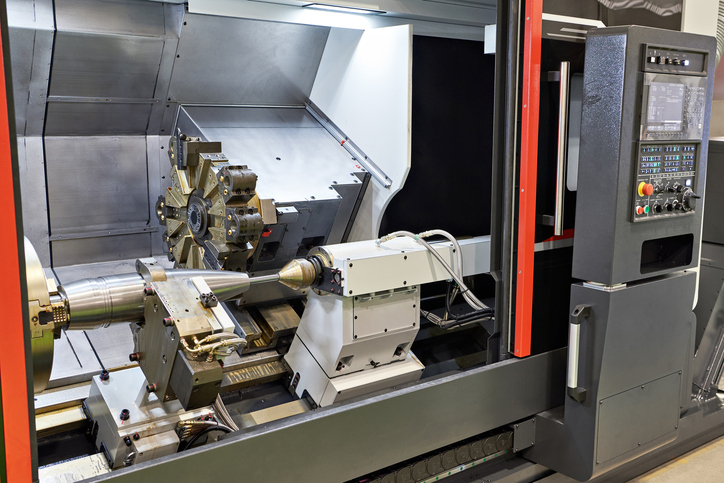
Tool selection and process optimization directly impact part quality, production efficiency, and manufacturing costs in CNC manufacturing. There’s no universal answer. The right approach depends on the material, the geometry, and the tolerance requirements of each specific part.
For titanium, carbide tools with advanced coatings, TiAlN or AlTiN, are necessary to resist heat and wear. Cutting speeds should stay between 50 and 150 surface feet per minute, with high-pressure coolant applied aggressively to manage heat buildup. Advanced titanium machining operations now achieve speeds of approximately 340 cm per minute on milling machines through optimized tooling and dynamic tool paths. Tool wear monitoring is non-negotiable; titanium accelerates degradation in ways that can lead to catastrophic failure if you’re not watching closely.
For Inconel and nickel superalloys, ceramic or CBN inserts provide the high-temperature stability these materials demand. Cutting speeds drop to 20 to 40 surface feet per minute, with increased feed rates to minimize work hardening. Machine rigidity is critical. Superalloys push back hard, and any flex in the setup will show up as dimensional error or surface damage. Plan for frequent tool replacement; these materials are unforgiving.
For aluminum, sharp, polished cutting edges prevent material adhesion. Cutting speeds can climb to 300 to 1,000 surface feet per minute. Focus on chip evacuation, aluminum produces long, stringy chips that can recut if they’re not cleared efficiently. Monitor for built-up edge formation, which degrades surface finish and can cause part-to-part variation.
Process optimization is continuous, not a one-time exercise. Every measurement, every adjustment, and every production run generates data that feeds back into process refinement.

Advancing Through Automation and Technology
The CNC manufacturing landscape continues to evolve. New technologies offer real opportunities to improve precision, efficiency, and consistency for aerospace and defense programs.
Lights-out manufacturing enables unmanned, 24/7 production through advanced automation. Automated tool changers, robotic part loading, and integrated quality inspection allow machines to run continuously with minimal human intervention. The benefits are measurable: increased production capacity without proportional labor cost increases, improved consistency through reduced human variability, better utilization of expensive capital equipment, and faster response to urgent production requirements.
AI and machine learning are being integrated into CNC manufacturing operations for predictive maintenance, tool life monitoring, and real-time process optimization. These systems analyze sensor data to identify patterns that precede tool failure or quality issues. Early detection allows scheduled tool changes before parts are scrapped, process adjustments before dimensions drift out of tolerance, and reduced unplanned downtime from equipment failures.
Hybrid manufacturing combines additive manufacturing, 3D printing, with subtractive CNC machining. This approach creates complex, lightweight structures through additive processes, then finishes them to precise tolerances through conventional machining. It enables topologically optimized designs that reduce weight, consolidated assemblies that eliminate fasteners, and reduced material waste compared to traditional machining. For defense prototype programs, hybrid manufacturing can dramatically shorten lead times for complex parts that would otherwise require extensive machining from solid billet.
We’re investing where the technology delivers measurable benefits to our clients, not chasing technology for its own sake.
The intersection of automation and aerospace CNC manufacturing is where the next generation of performance gains will be found. Shops that build automation into their processes now, rather than treating it as a future project, will have a structural cost and quality advantage over those that wait. For defense programs facing cost pressure and schedule compression, that advantage translates directly into program value.

Building Supplier Relationships That Hold Up Under Pressure
Aerospace and defense CNC manufacturing depends on reliable supply chains. Material quality, delivery consistency, and documentation accuracy from suppliers directly impact your ability to meet customer requirements. A single supplier failure can cascade into a program delay that no one wants to explain to a program office.
Material suppliers must provide certified material test reports (CMTRs) documenting chemical composition and mechanical properties, full traceability to original mill heat numbers, compliance with applicable material specifications (AMS, ASTM, MIL), and consistent delivery schedules that support production planning. Aerospace-grade raw material isn’t something you substitute without authorization. Using a non-conforming material source, even once, can trigger a product assurance review that affects the entire program.
Tooling suppliers should offer technical support for material-specific applications, consistent tool quality and performance, availability of specialized geometries and coatings, and responsive delivery for urgent requirements.
Special process suppliers covering heat treat, plating, and coating need NADCAP accreditation for applicable processes, documented process controls, and the capacity to handle your volume requirements. Geographic proximity matters too; excessive transportation time adds risk and cost to the supply chain.
Approved Supplier Lists (ASLs) are a real constraint in aerospace and defense CNC manufacturing. Major prime contractors maintain lists of approved suppliers for materials, processes, and components. Getting on those lists requires qualification audits and demonstrated performance data. Staying on them requires consistent delivery, quality, and documentation year after year.
Supplier relationships in aerospace and defense aren’t transactional. They’re partnerships built on mutual understanding of requirements, consistent performance, and open communication when problems arise.

Training and Workforce Development
Advanced CNC manufacturing requires skilled operators, programmers, and quality technicians. The complexity of aerospace and defense work demands continuous training and development. The best machines in the world don’t produce good parts without the people who know how to run them correctly.
Operator training needs to cover machine operation and safety procedures, setup and tooling procedures for complex parts, in-process inspection and measurement techniques, and material handling practices that protect part integrity. Aerospace work is unforgiving of handling damage; scratches, and dings on a titanium part aren’t cosmetic. They’re potential stress risers that can fail under cyclic loading.
Programmer training needs to include CAM software proficiency for multi-axis programming, deep understanding of material properties and machinability, toolpath optimization for efficiency and quality, and simulation and verification to prevent crashes. A crashed 5-axis machine isn’t just expensive to repair. It pulls production capacity offline at the worst possible time and can affect delivery commitments to programs that have no schedule slack.
Quality technician training must address measurement equipment operation and calibration, interpretation of engineering drawings and GD&T, statistical process control and data analysis, and nonconformance identification and reporting procedures. In aerospace CNC manufacturing, a quality technician who can’t read a complex drawing correctly is a liability, not just to the shop, but to the program customer.
Cross-training is underrated. Shops that build depth across roles, so that operators understand basic quality requirements and quality techs understand the machining process, produce better outcomes than those that work in rigid silos. The collective knowledge of the team is what catches problems before they escape.
We invest in training because skilled people are the foundation of quality CNC manufacturing. Technology helps, but expertise makes the difference.
Moving Forward With the Right CNC Manufacturing Partner
CNC manufacturing for defense and aerospace demands precision, consistency, and unwavering attention to detail. The practices outlined in this guide represent the baseline for reliable performance in these critical industries.
You need advanced technology, rigorous quality systems, skilled personnel, and reliable suppliers. But more than that, you need the discipline to execute these practices consistently. The organizations that succeed in aerospace and defense CNC manufacturing aren’t necessarily the ones with the newest equipment. They’re the ones who’ve built a culture where the standard doesn’t slip and where every person on the floor understands why the work matters.
We’ve built our approach around these principles since 1979. Our NADCAP, NAVSEA, and ISO accreditations demonstrate our commitment to the standards these industries demand. Our investment in 5-axis machining, quality systems, and workforce development reflects our understanding that excellence in aerospace and defense CNC manufacturing isn’t a destination; it’s a continuous journey.
The components you manufacture support missions where failure isn’t acceptable. The practices you implement determine whether you can consistently deliver the precision, reliability, and quality these applications demand.
Ready to Work with a CNC Manufacturing Partner Who Understands These Requirements?
Aerospace and defense programs don’t have room for suppliers who are learning on the job. Our team brings decades of CNC manufacturing experience, AS9100D and NADCAP accreditation, and the 5-axis machining capability your most complex components demand.
Whether you need custom cnc parts for a defense prototype, aluminum prototype machining for early design validation, or full production support for flight-critical components, we build the process around your requirements—not the other way around.