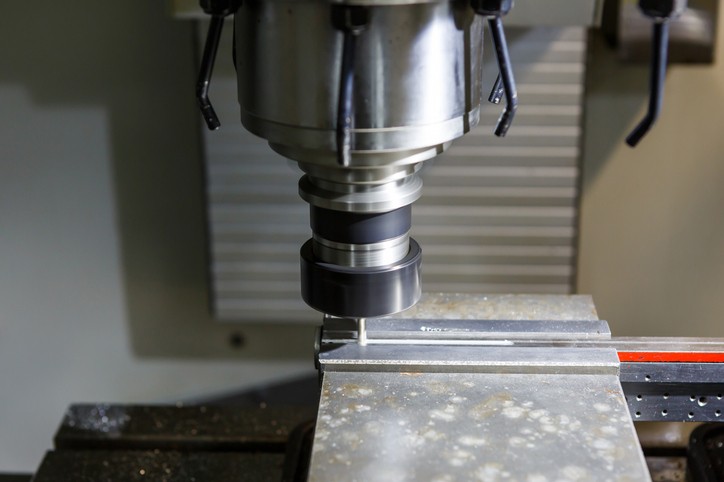
- Precision Tolerance: Where Acceptable Becomes Mission Critical
- 5-Axis Machining Capabilities for Complex Defense Components
- Material Expertise: How Metals Behave Under Stress
- Quality Control and In-House Metrology
- Scalability: Prototype to Production
- CNC Lathe and Milling Machine Integration: Multi-Tasking Capabilities
- Manufacturing Environment: The Foundation of Precision
- What This Means for Your Sourcing Decision
- Frequently Asked Questions
Key Takeaways
- Defense CNC machining requires precision tolerances of ±0.0001″ to ±0.0005″, climate-controlled environments, and rigorous certifications like AS9100 and ITAR compliance to ensure mission-critical reliability.
- Essential capabilities include 5-axis machining for complex geometries, specialized material expertise (titanium, Inconel, stainless steels), and in-house metrology with CMM and optical comparators for real-time quality control.
- Successful defense suppliers combine technical capabilities with cybersecurity standards (NIST 800-171), scalability from prototype to full production, and engineering support for design optimization.
You’re not shopping for basic metal parts. You’re sourcing components that will operate in extreme environments where failure means mission compromise.
Defense procurement requires a different mindset than commercial manufacturing. The supplier you choose needs to deliver precision that measures in ten-thousandths of an inch, maintain compliance with evolving security standards, and provide traceability that withstands audit scrutiny.
Here’s what matters when you evaluate CNC lathe and milling machine suppliers for defense applications.
Precision Tolerance: Where Acceptable Becomes Mission Critical
Defense components often require tolerances as tight as ±0.0001 inches. A single deviation of 0.1 mm can compromise ballistic missile defense systems.
That level of precision demands more than capable CNC lathe and milling machine equipment.
You need a supplier who maintains temperature-controlled environments. Thermal expansion affects dimensional stability during machining and inspection. Temperature differences of just 4°F can push critical dimensions out of spec.
Look for suppliers who specify their environmental controls. Ask about quality documentation processes. Request First Article Inspection reports for components with similar tolerance requirements.
The ability to consistently hold ±0.0001″ to ±0.0005″ tolerances separates precision machining from basic fabrication. Your supplier should demonstrate this with documented proof, not marketing claims.
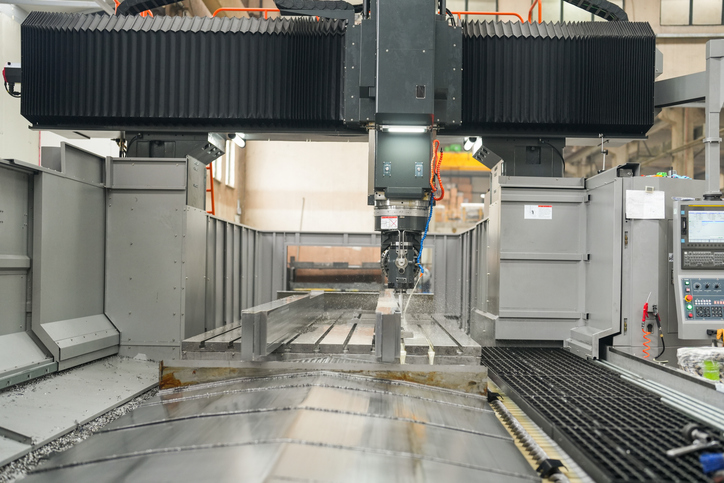
5-Axis Machining Capabilities for Complex Defense Components
5-axis milling gets mentioned frequently in supplier capabilities lists. The real question is whether they use it effectively for defense applications.
Traditional machining of complex parts requires 5-10 different setups. Each setup introduces potential errors. 5-axis machining reduces setup requirements by 60-80% for complex geometries.
That reduction matters for three reasons:
- Fewer setups mean fewer opportunities for dimensional drift
- Single-setup machining improves geometric relationships between features
- Reduced handling minimizes contamination risk for sensitive components
When you evaluate capabilities, ask about the specific machines in their facility. Vertical machining centers offer versatility for a wide range of parts. Horizontal machining centers provide faster production for high-volume, complex components with alodine coating requirements.
The machine type matters less than how your supplier applies it to your geometry requirements. Many sheet metal fabricators also maintain advanced machining capabilities for complete component manufacturing.
Material Expertise: How Metals Behave Under Stress
Defense applications demand specialized materials. Titanium for weight-critical aerospace components. Inconel for high-temperature environments. Stainless steels for corrosive conditions.
Each material machines differently. Titanium generates heat that can work-harden surfaces if you use incorrect cutting parameters. Inconel wears tools rapidly and requires specific speeds and feeds to maintain accuracy.
Your supplier needs documented experience with materials your applications require, including those needing industrial engraving services for part marking and identification. Ask for examples of similar components they’ve produced. Request details about tooling strategies for difficult-to-machine alloys.
Material expertise shows up in three areas:
- Tool life management and replacement protocols
- Surface finish consistency across production runs
- Dimensional stability in materials prone to stress relief
Generic machining experience doesn’t transfer directly to defense materials. You need a supplier who understands the specific challenges your materials present, including processes like aluminum dip brazing for joining complex assemblies.
AS9100 Certification: The Baseline Standard
AS9100 has become the default expectation for aerospace and defense suppliers. Major contractors including Boeing, Lockheed Martin, and Northrop Grumman require it from their supply chain.
Without AS9100 certification, you face significant challenges winning defense contracts.
AS9100 extends ISO 9001 with aerospace-specific requirements for product safety, risk management, supplier control, and traceability. The certification demonstrates your supplier maintains documented processes for quality management throughout production, which is essential for military fabrication programs.
Certification alone doesn’t guarantee performance.
Evaluate how your supplier implements AS9100 requirements:
- Do they maintain in-house metrology with CMM and optical comparators?
- Can they provide full traceability documentation for every component?
- How do they handle nonconforming material and corrective actions?
- What’s their process for managing engineering changes?
The answers reveal whether AS9100 shapes their operations or just hangs on the wall.
ITAR Compliance: Protecting Defense Information
ITAR governs the export and import of defense-related materials and information. Your supplier must comply to work with defense clients.
ITAR violations carry severe consequences. Civil penalties reach $500,000. Criminal penalties can hit $1 million plus prison sentences up to 10 years. Violations result in loss of export privileges and reputational damage that ends defense contracting relationships.
ITAR compliance requires more than registration. Your supplier needs documented procedures for controlling access to technical data, managing foreign national access, and maintaining secure facilities.
Ask about their ITAR compliance program. Request details about facility security measures. Understand how they handle technical drawings and specifications for controlled items.
ITAR compliance protects national security and prevents supply chain disruptions caused by regulatory violations.

Cybersecurity Standards: NIST 800-171 and CMMC
Defense contractors must implement NIST SP 800-171 requirements to protect covered defense information. The standard includes 110 security controls that become mandatory if your supplier participates in DoD, GSA, NASA, or other federal agency supply chains.
CMMC implementation creates additional urgency. The final rule became effective in December 2024. CMMC Level 2 requirements will appear in new contracts by 2026, with Level 3 following in 2027.
Your supplier needs to demonstrate:
- Implementation of NIST 800-171 security controls
- Regular security assessments and gap analysis
- Incident response procedures for data breaches
- Employee training on cybersecurity requirements
Technical specifications and design data represent valuable intellectual property. Cybersecurity failures compromise your competitive advantage and national security.
Verify your supplier takes cybersecurity seriously before sharing sensitive information.
Quality Control and In-House Metrology
Quality control separates precision machining from hope-based manufacturing.
Your supplier needs in-house metrology capabilities that match the precision requirements of your components. Coordinate measuring machines provide three-dimensional verification of complex geometries. Optical comparators enable precise measurement of small features.
In-house metrology delivers three advantages:
- Speed. Your supplier can verify dimensions during production rather than waiting for external inspection services.
- Control. Direct access to measurement equipment enables real-time process adjustments when dimensions drift.
- Documentation. Comprehensive inspection reports provide the traceability defense applications require.
Ask about inspection procedures. Request examples of inspection reports. Understand how they calibrate measurement equipment and maintain traceability to national standards.
Quality control isn’t added at the end of production. It needs to be integrated throughout the manufacturing process.
Scalability: Prototype to Production
Defense programs evolve. Initial prototypes lead to low-rate production, then full-rate production as programs mature.
You need a supplier who can scale with your program requirements without compromising quality or delivery.
Scalability requires three elements:
- Capacity. Sufficient equipment and floor space to handle increased production volumes.
- Process control. Documented procedures that maintain consistency as production scales up.
- Supply chain management. Relationships with material suppliers that support increased demand.
Evaluate your supplier’s current capacity. Understand their expansion capabilities. Ask about their experience scaling production for similar programs.
Finding a new supplier mid-program creates risk. Choose a supplier who can grow with your needs from the start.
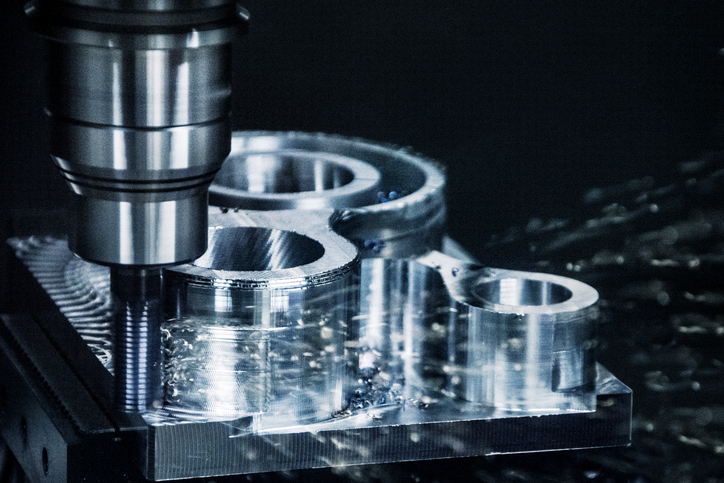
CNC Lathe and Milling Machine Integration: Multi-Tasking Capabilities
Multi-tasking machines combine milling and turning operations in a single setup. For complex components requiring both turned and milled features, mill-turn capabilities deliver significant advantages.
Single-setup machining improves accuracy by maintaining geometric relationships between features. It reduces production time by eliminating transfers between machines. It minimizes handling that can introduce contamination or damage.
Mill-turn capabilities particularly benefit components with:
- Complex internal features requiring both turning and milling
- Tight geometric tolerances between turned and milled surfaces
- Small batch sizes where setup time significantly impacts total production time
Not every component requires mill-turn capabilities. But when your geometry demands it, the capability becomes essential.
Swiss-Style Turning for Small, Complex Parts
Swiss-style lathes excel at producing small, complex turned parts. The design uses a guide bushing that supports the workpiece close to the cutting tool, enabling exceptional precision on small-diameter components.
Swiss turning proves ideal for:
- Pins and fasteners with tight tolerances
- Shafts with complex features and tight runout requirements
- Small components requiring multiple operations in a single setup
If your program includes small, precision-turned components, verify your supplier maintains Swiss-style turning capabilities with experienced programmers who understand this equipment’s unique requirements.
Automation and Process Monitoring
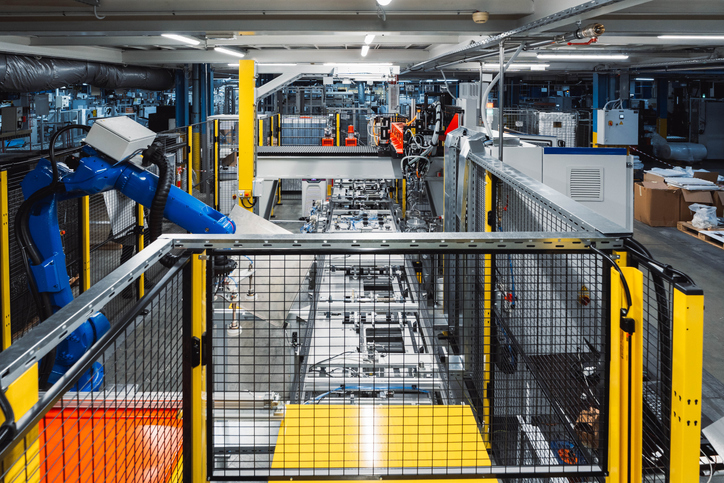
Automation delivers consistency that manual operations struggle to match. Robotic loaders enable 24/7 production without operator fatigue affecting quality. Real-time process monitoring detects tool wear and dimensional drift before producing nonconforming parts.
Automation particularly benefits defense manufacturing in three ways:
- Consistency. Automated systems repeat processes identically across production runs.
- Efficiency. Lights-out manufacturing maximizes equipment utilization and reduces lead times.
- Traceability. Automated systems generate detailed production data that supports quality documentation requirements.
Ask about your supplier’s automation capabilities. Understand how they use process monitoring to maintain quality. Request examples of how automation has improved consistency for similar components.
Manufacturing Environment: The Foundation of Precision
Precision machining requires environmental stability. Temperature fluctuations cause thermal expansion in both workpieces and machine tools. Humidity affects measurement equipment calibration. Vibration can compromise surface finish and dimensional accuracy.
Your supplier’s manufacturing environment reveals their commitment to precision.
Look for:
- Climate-controlled facilities maintaining consistent temperature and humidity
- Isolated foundations for precision equipment to minimize vibration
- Clean manufacturing areas that prevent contamination of sensitive components
- Proper lighting for inspection and quality verification
The manufacturing environment isn’t glamorous. But it fundamentally affects your supplier’s ability to maintain the precision your applications require.
Engineering Support and Design Collaboration
The best suppliers don’t just manufacture to your prints. They collaborate to optimize designs for manufacturability, durability, and performance.
Design for Manufacturability support delivers value in several ways:
- Cost reduction. Identifying design features that add cost without adding value.
- Quality improvement. Recommending design changes that improve dimensional stability or reduce inspection complexity.
- Risk mitigation. Flagging potential manufacturing challenges before they impact your schedule.
Your supplier should bring manufacturing expertise to the design process. Ask about their engineering support capabilities. Request examples of DFM recommendations they’ve provided to other clients.
Engineering collaboration distinguishes strategic suppliers from transactional vendors.
What This Means for Your Sourcing Decision
Defense procurement demands more than finding a supplier with CNC machines. You need a partner who understands the precision, compliance, and reliability requirements that defense applications impose.
The capabilities outlined here represent the baseline for defense machining: tolerance control, certifications, cybersecurity, quality systems, material expertise, and environmental controls.
Your sourcing decision affects program success, delivery schedules, and mission readiness.
Evaluate suppliers based on demonstrated capabilities, not marketing claims. Request documentation. Visit facilities. Talk to their quality team. Understand how they’ve solved similar challenges for other programs.
The right supplier becomes a strategic partner who contributes to your program’s success. The wrong supplier creates risk that compounds throughout production.
Choose carefully. Your mission depends on it.
Partner with NAMF for Defense CNC Machining
New Age Metal Fabricating delivers precision-machined components for defense and aerospace applications with over 40 years of proven experience. Explore our advanced CNC milling capabilities and discover how we maintain the certifications, equipment, and expertise your defense programs require.