- Understanding the Fundamental Difference
- When to Choose a CNC Lathe
- When to Choose a CNC Mill
- The Hybrid Solution: Mill-Turn Centers
- Part Geometry Drives Machine Selection
- How We Approach Machine Selection at NAMF
- CNC Mill vs Lathe: Making the Right Choice for Your Project
- Beyond Machine Selection: Design for Manufacturability
- Conclusion
- Frequently Asked Questions
Key Takeaways
- CNC lathes rotate the workpiece and excel at cylindrical parts, while CNC mills rotate the cutting tool and handle complex geometries on multiple faces.
- Part geometry is the primary factor in machine selection—symmetrical parts suit lathes, while intricate shapes with pockets and slots require mills.
- Mill-turn centers combine both capabilities in one machine, reducing setups and improving accuracy for parts that need both turning and milling operations.
When you’re planning a manufacturing project, one of the first decisions you’ll face is machine selection. Do you need a CNC lathe or a CNC mill?
The answer shapes everything from production timelines to cost efficiency to the final quality of your parts. Get it right, and you streamline your entire operation. Get it wrong, and you’re looking at delays, wasted material, and compromised precision.
This guide breaks down the practical differences between CNC lathes and CNC mills, helping you understand which machine fits your specific manufacturing needs.
Understanding the Fundamental Difference
The core distinction comes down to motion.
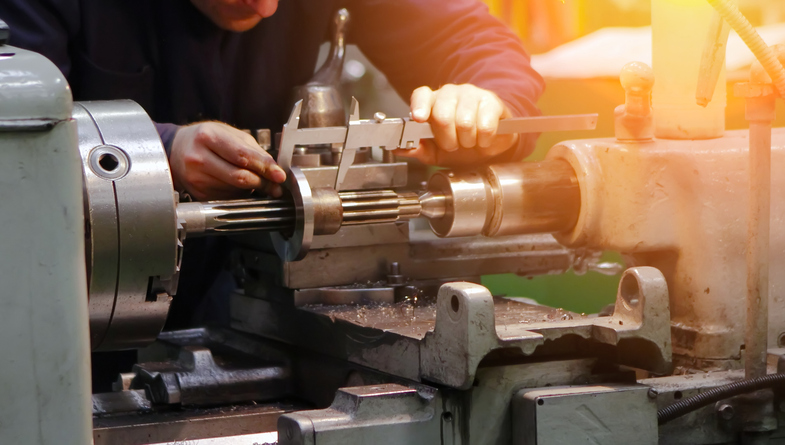
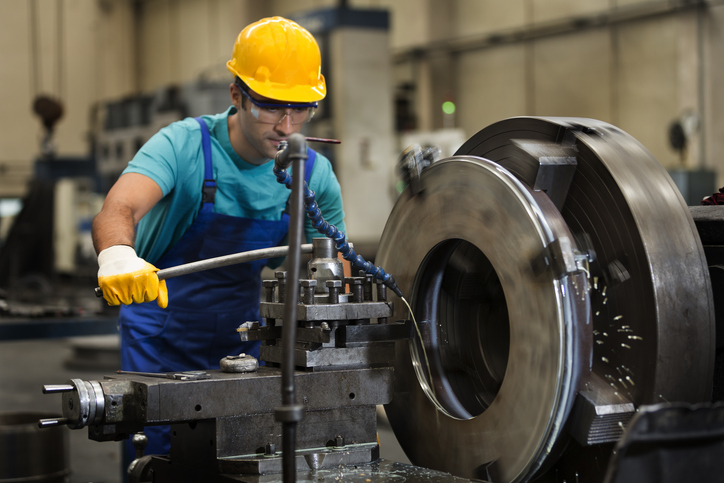
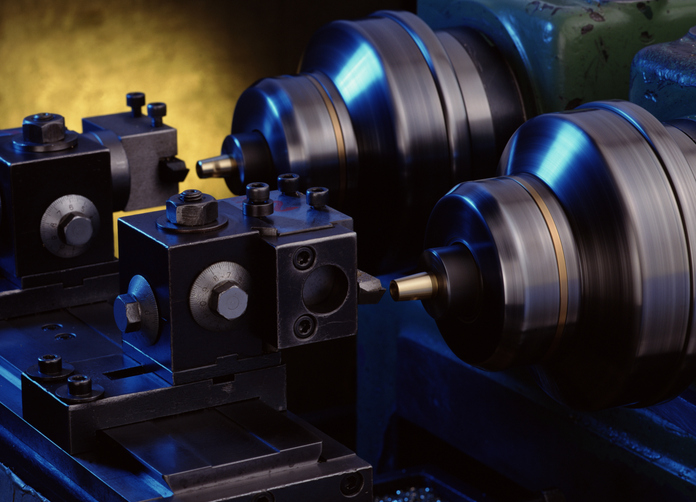
CNC lathes rotate the workpiece against stationary cutting tools. The part spins while the tool stays put, carving away material to create cylindrical or conical shapes.
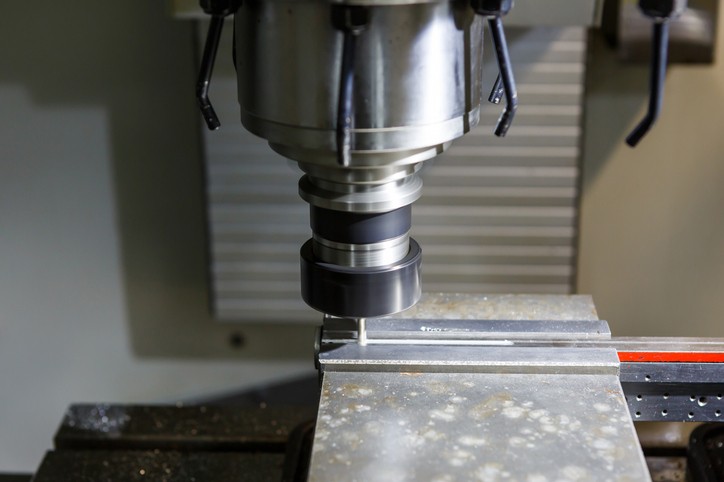
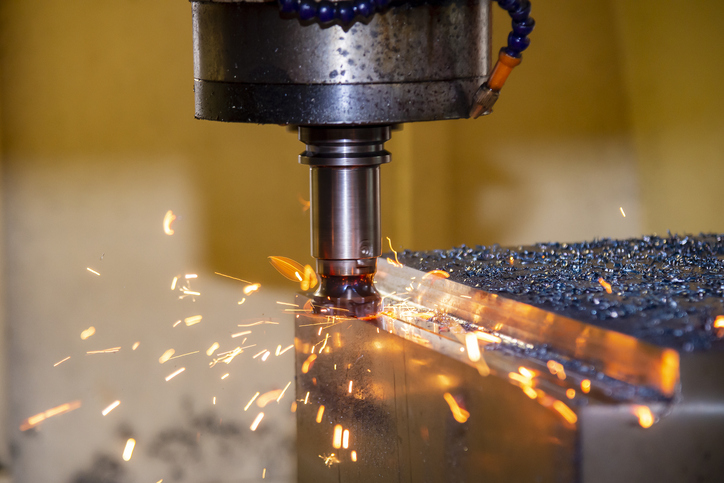
CNC mills rotate the cutting tools around a fixed workpiece. The part remains stationary while the tool moves along multiple axes, enabling complex geometries, flat surfaces, and intricate features.
Both machines use Computer Numerical Control (CNC) for precision. Both remove material to create finished parts. But the way they approach that task determines what they can produce efficiently.
When to Choose a CNC Lathe
CNC lathes excel at one thing: creating perfectly symmetrical parts around a central axis.
If your component is round, cylindrical, or conical, a lathe is typically your best choice. Think shafts, bushings, pins, screws, and any part where rotational symmetry defines the geometry.
Speed Advantages for Cylindrical Components
Lathes deliver exceptional efficiency for bar stock and tubular materials. When comparing CNC mill vs lathe performance, lathes can achieve material removal rates up to 40% faster than milling machines for similar operations.
That speed advantage matters when you’re producing high volumes of symmetrical defense components. Less time per part means lower costs and faster delivery.
Live Tooling Expands Lathe Capabilities
Modern CNC lathes aren’t limited to simple turning operations anymore.
Live tooling has transformed what lathes can accomplish. Live tooling permits all standard turning cuts, plus milling features as well, allowing significant reductions in lead time and machining cost.
With live tooling, you can machine features in both radial and axial directions without moving the part to a different machine. That means drilling, milling, and tapping operations happen on the same setup, maintaining tighter tolerances and reducing handling time.
Ideal Applications for CNC Lathes
You’ll get the best results from a CNC lathe when producing:
- Shafts and spindles with precise diameter requirements
- Bushings and sleeves with tight internal dimensions
- Threaded components requiring concentric threading
- Conical parts like nozzles or tapered pins
- Any component with rotational symmetry as the primary feature
When to Choose a CNC Mill
CNC mills offer superior versatility for complex geometric shapes. When your part requires multiple faces, intricate patterns, pockets, slots, or detailed features that don’t revolve around a central axis, milling becomes the preferred method.
Multi-Axis Capabilities for Complex Geometries
The real power of CNC milling shows up in multi-axis operations.
Standard 3-axis mills move along the X, Y, and Z axes, handling most flat and prismatic parts effectively. But 5-axis CNC machines take complexity to another level.
5-axis CNC machines can approach parts like turbine blades and impellers from almost any angle, with advantages including reduced setup time, better surface finishes, more efficient material removal, and support for complex holes and undercuts.
For aerospace and defense applications, this capability becomes critical. Parts with machined features on multiple faces or complex contours benefit significantly from 5-axis approaches over traditional 3-axis methods.
Precision Requirements in Aerospace Manufacturing
When you’re working in aerospace and defense, tolerances aren’t just tight—they’re measured in microns.
Leading aerospace manufacturers routinely achieve tolerances of 2 microns or less on components for spacecraft and jet engines, with CNC machining capabilities reaching as tight as ±0.0005 inches.
This level of precision matters because even minor deviations can cause catastrophic failures in flight-critical systems.
Ideal Applications for CNC Mills
CNC milling works best for:
- Enclosures and housings with multiple mounting faces
- Bracket assemblies requiring precise hole patterns
- Parts with pockets, slots, or recessed features
- Components with complex 3D contours
- Flat plates requiring detailed surface features
- Any part where geometry extends beyond rotational symmetry
The Hybrid Solution: Mill-Turn Centers
You don’t always have to choose between lathe and mill capabilities.
Mill-turn centers combine both technologies in a single machine, offering one-shot machining that eliminates multiple setups and reduces handling.
Things like the Mazak Integrex and Doosan Puma are huge money makers for many manufacturers because you can complete complex parts without operator handling between operations.
Benefits of Mill-Turn Technology
Mill-turn centers deliver several advantages:
- Reduced setup time: Complete the part in one operation instead of moving between machines
- Improved accuracy: Eliminate tolerance stacking from multiple setups
- Increased efficiency: Less handling means faster throughput
- Enhanced versatility: Handle both turning and milling operations seamlessly
For parts requiring both cylindrical features and complex milled details, mill-turn technology often represents the most efficient manufacturing approach.
Part Geometry Drives Machine Selection
The fundamental selection criteria comes down to geometry.
If your part is symmetrical around a central axis, choose a lathe. If it requires complex shapes, multiple faces, or intricate features, choose a mill.
Material properties also influence your decision. Some machines handle tougher metals or specific plastics more effectively than others. But geometry remains the primary determining factor.
Understanding CNC Mill vs Lathe Tolerance Management
Here’s something commonly overlooked: tolerance accumulation matters more than individual part tolerances.
The “tolerance chain” effect describes how smallest tolerancing errors on discrete components accumulate when mated, impacting system-wide performance. Tight aerospace CNC machining tolerance variations directly impact part clearance, where overheating causes seizure but over-looseness causes leakage and vibration.
This makes manufacturability under close tolerance the foundation of overall reliability, from engine to flight control system.
Choosing the right machine for your part geometry helps you maintain those tight tolerances throughout the manufacturing process, reducing the risk of tolerance stacking that compromises final assembly performance.
How We Approach Machine Selection at NAMF
At New Age Metal Fabricating, we’ve been making manufacturing decisions for over four decades.
Our approach starts with understanding your part requirements completely. We look at the geometry, the tolerances, the material specifications, and the production volume. Then we match those requirements to the most efficient manufacturing method.
Our CNC Milling Capabilities
We operate advanced CNC milling machines supporting both vertical and horizontal operations. Our equipment handles complex geometries, tight tolerances, and the rigorous specifications required for military fabrication and aerospace applications.
Whether you need 3-axis machining for straightforward prismatic parts or multi-axis capabilities for complex contours, we have the equipment and expertise to produce precision components that meet MIL-SPEC and aerospace standards.
Integrated Manufacturing and Precision Fabricating Under One Roof
One of our key advantages is full in-house integration.
We combine CNC machining with precision metal fabrication and specialized aluminum dip brazing services. That means you get complete, turnkey solutions without coordinating multiple vendors.
When you work with a single-source supplier, you eliminate the communication gaps and quality inconsistencies that come from managing multiple fabricators. You get one point of contact, consistent quality standards, and streamlined project management.
Quality Assurance for High-Stakes Applications
We hold NADCAP, NAVSEA, and ISO certifications because our clients operate in industries where failure isn’t an option.
Every part we produce undergoes rigorous quality control processes. We maintain ITAR compliance for defense-related work. We perform First Article Inspections to verify that newly produced parts meet all engineering and design specifications before full production begins.
Our quality assurance processes ensure that whether we’re using a lathe or a mill, the finished component meets your exact requirements.
CNC Mill vs Lathe: Making the Right Choice for Your Project
Here’s a practical framework for machine selection:
Choose a CNC lathe when:
- Your part is cylindrical, conical, or symmetrical around a central axis
- You’re producing high volumes of similar round components
- Speed and material removal rate are priorities
- The primary features are diameters, threads, and tapers
Choose a CNC mill when:
- Your part has complex geometries on multiple faces
- You need pockets, slots, or detailed surface features
- The component requires precise hole patterns or mounting surfaces
- Multi-axis access improves efficiency or quality
Consider mill-turn technology when:
- Your part combines cylindrical features with complex milled details
- Reducing setups and handling improves accuracy
- One-shot machining offers significant efficiency gains
Beyond Machine Selection: Design for Manufacturability
The best machine selection starts during the design phase.
Design for Manufacturability (DFM) means creating parts that are easier to produce, reducing costs while improving quality. When you involve manufacturing expertise early in the design process, you can optimize components for the most efficient production method.
We offer collaborative engineering support to help refine designs before production begins. Sometimes a small design modification makes a significant difference in manufacturability, lead time, and cost.
Conclusion
Choosing between a CNC lathe and a CNC mill depends on your specific part requirements, production volumes, and quality standards.
At NAMF, we bring decades of precision manufacturing experience to every project. Our dual facilities in Fairfield, NJ and Ronkonkoma, NY provide the capacity and flexibility to handle complex defense and aerospace components with the reliability your applications demand.
Understanding the difference between welding vs fabrication processes also helps optimize your manufacturing strategy. If you’re working on a project requiring precision-machined components with rapid machining turnaround, we can help you determine the most efficient manufacturing approach.
Partner with NAMF for Precision CNC Machining
Whether you need CNC milling, turning, or integrated fabrication services, our team delivers mission-critical components on time and to spec. Let’s discuss how we can support your next project.