- What Makes Defense Manufacturing Different from Commercial Production?
- Phase 1: How DFARS-Compliant Raw Material Sourcing Works
- Phase 2: Precision Machining and Forming Operations
- Phase 3: Military Fabrication, Defense Welding, and Brazing
- Phase 4: What Are MIL-SPEC Coatings and Why Are They Required?
- How Quality Assurance Works in Defense Manufacturing
- How Military Enclosures Are Built to Spec
- What Are the Biggest Supply Chain Risks in Defense Manufacturing?
- How to Choose the Right Defense Manufacturing Partner
- Mission Readiness Starts Before the First Cut
- Frequently Asked Questions
Key Takeaways
- DFARS-compliant raw material sourcing is the foundational step that determines the integrity of every defense component downstream.
- Every production phase, from precision machining and certified welding to MIL-SPEC coatings, must meet strict military tolerances without exception.
- An end-to-end manufacturing partner with fully in-house capabilities reduces supply chain fragmentation and protects documentation continuity across the entire build lifecycle.
Defense manufacturing is not simply about cutting metal and meeting tolerances. It is an end-to-end discipline of risk mitigation, regulatory compliance, and precision execution where a single gap in any production phase can compromise an entire program. For procurement professionals and engineers evaluating aerospace and defense manufacturing partners, understanding how each phase works is essential to making sound sourcing decisions.
When a component is destined for a high-pressure aerospace application or an active combat environment, supply chain vulnerabilities carry real operational consequences. Every phase of the defense manufacturing process, from raw material sourcing and precision machining to certified welding, specialized surface finishing, and quality verification, must be executed with complete traceability and zero tolerance for noncompliance.
This guide covers the full lifecycle of defense manufacturing: what distinguishes it from commercial production, how each production phase works, what compliance frameworks govern the process, and what to look for in a manufacturing partner capable of delivering truly mission-ready components.
What Makes Defense Manufacturing Different from Commercial Production?
Defense manufacturing requires complete material traceability, zero-defect conformance, and strict regulatory compliance at every stage of production. Commercial manufacturing does not.
Commercial off-the-shelf (COTS) components are designed and produced for predictable, controlled operating environments. Defense components are engineered to survive the opposite. They must perform reliably under extreme thermal cycling, severe shock and vibration loading, chemical exposure, and highly corrosive atmospheric conditions.
In this sector, a component that is close to specification is not an acceptable component. It is a liability. A microscopic stress fracture in an aerospace fuselage bracket, or a degraded coating on a tactical communications enclosure, can produce catastrophic system failure under operational loads. The standard for conformance in defense manufacturing is not a statistical defect rate with an acceptable reject threshold. It is 100% conformance, verified and documented.
The Four Requirements That Define Defense Manufacturing
Understanding the real demands of defense manufacturing starts with four non-negotiable requirements:
- Regulatory compliance: Every process must adhere to applicable standards, including MIL-SPEC, AS9100, ITAR, and DFARS. Commercial equivalents do not satisfy these requirements.
- Complete material traceability: Every piece of metal must be tracked from the source mill certificate through every subsequent manufacturing operation to the final inspection record.
- Zero-defect conformance: Acceptance of nonconforming material is not an option. Every delivered component must conform fully to engineering specifications.
- Documented chain of custody: Every operation, verification, and handoff must be recorded, certified, and auditable at any point in the program lifecycle.
When a manufacturing partner cannot demonstrate all four requirements across their operations, they represent unacceptable program risk regardless of their price or lead time.
Phase 1: How DFARS-Compliant Raw Material Sourcing Works
DFARS-compliant sourcing requires defense manufacturers to procure specialty metals exclusively from domestic mills or qualifying countries. This is the first and most critical control point in the defense manufacturing supply chain.
The Defense Federal Acquisition Regulation Supplement (DFARS) exists specifically to prevent counterfeit, substandard, or adversarial materials from entering the supply chain. A compromised alloy that fails to meet tensile or yield strength requirements may be visually indistinguishable from a certified one, but it will behave catastrophically under operational load.
What Materials Fall Under DFARS Requirements?
DFARS sourcing requirements apply to the specialty metals most commonly used in defense programs, including:
- High-strength titanium alloys for aerospace structural components
- Military-grade aluminum alloys such as 7075-T6 and 6061-T6
- Specialized high-grade stainless steels and nickel-based superalloys such as Inconel for extreme-temperature applications
- Copper-based alloys for electrical and thermal management components in military electronics
Each of these materials must be procured from compliant sources and documented with Material Test Reports (MTRs) that confirm the exact chemical composition and mechanical properties of every batch before production begins. Receiving a certificate is not enough. The data on that certificate must be verified against the engineering specification before a single cut is made.
How Is Raw Material Traceability Maintained?
Traceability in defense manufacturing is a continuous discipline, not a single intake check. Every physical transformation of the raw material must remain traceable to its source mill certificate throughout the entire production lifecycle.
This means lot numbers, heat numbers, and MTR documentation stay attached to the material from receipt through final inspection. For procurement professionals reviewing vendor qualifications, one question cuts through everything: can your manufacturing partner produce an unbroken chain of documentation from the mill certificate to the final inspection report? Any gaps in that chain represent supply chain risk that will surface, eventually, during an audit or a program review at the worst possible time.

Phase 2: Precision Machining and Forming Operations
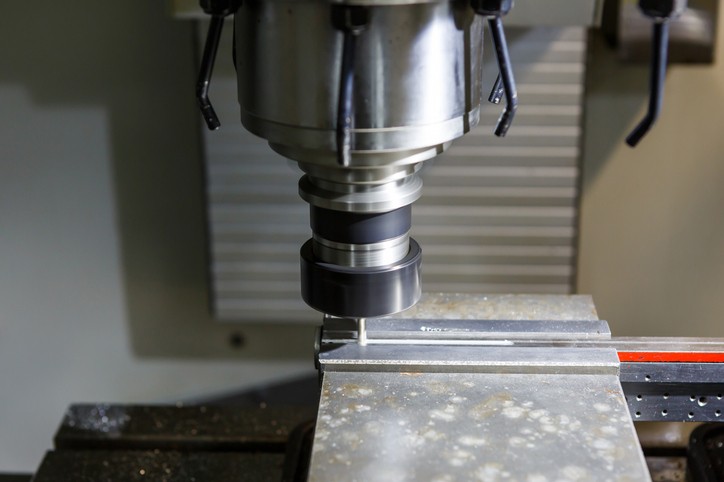
Precision machining in defense manufacturing requires high-tolerance, multi-axis CNC equipment capable of holding dimensional specifications to fractions of a thousandth of an inch. This is where the technical demands of the discipline become most visible on the shop floor.
Once DFARS-compliant materials are validated and documented, production moves to the machining environment. Translating complex 3D CAD files and engineering drawings with geometric dimensioning and tolerancing (GD&T) callouts into physical metal components is a technically demanding process that requires both advanced equipment and qualified personnel.
What Is Military CNC Machining?
Military CNC machining refers to computer numerical control machining operations specifically configured, calibrated, and certified for defense-grade component production. This means machines operating within tighter calibration windows than commercial equivalents, cutting tools selected and monitored for consistent performance across tight-tolerance operations, and machinists trained to read and execute complex GD&T specifications on defense engineering drawings without interpretation errors.
Military machining programs frequently involve components with complex geometric profiles, deep pockets, thin walls, and multiple critical reference dimensions that must each be independently verified during in-process inspection. These requirements demand equipment and operator qualifications that are substantively different from commercial contract machining environments.
How Does Custom CNC Machining Support Defense Programs?
Custom CNC machining capabilities are essential in defense manufacturing because no two programs are the same. Components range from complex aerodynamic fuselage brackets and weapons system housings to precision-machined interface surfaces for electronic enclosures and radar assemblies. Each requires a machining setup built directly from the engineering drawing.
Advanced 5-axis milling and turning centers allow manufacturers to machine complex aerospace geometries with fewer setups. Fewer setups reduce fixturing error accumulation, which directly improves overall dimensional accuracy. For complex defense components, 5-axis capability is a baseline production requirement, not an optional upgrade.
Vertical milling services are particularly important for defense structural and enclosure components. Flat surfaces, precision pockets, slots, contoured profiles, and mounting interfaces are features common in defense programs that are most efficiently and accurately produced on vertical milling platforms. A complete military machining operation combines vertical milling with horizontal turning, multi-axis milling, and complementary processes to cover the full geometry range of modern defense programs.
How Are Engineering Changes Managed Without Derailing Production?
Defense programs routinely issue engineering changes after production has started. Design tolerances get revised, material substitutions occur, and interface geometry changes as programs evolve. A capable manufacturing partner must have the internal engineering and documentation systems to absorb these changes without producing nonconforming material or creating traceability gaps in the production record.
This requires digital-first machining environments where CAM programs can be revised quickly, and every change is immediately reflected in the production traveler and quality records. Vendors without this integration capability become bottlenecks on active programs and create documentation risks that surface during first article inspections or customer audits.
Phase 3: Military Fabrication, Defense Welding, and Brazing
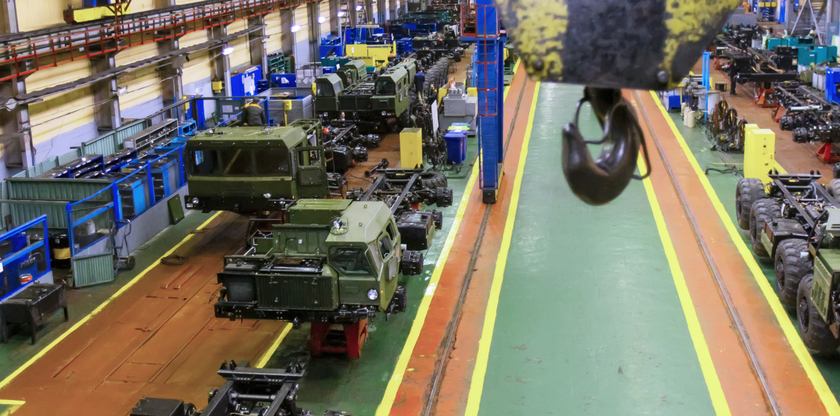
Military fabrication encompasses the forming, joining, and assembly operations that transform individually machined components into cohesive defense assemblies. This phase is among the most compliance-intensive in the entire production chain.
Military fabrication includes sheet metal forming, precision stamping, structural welding, and specialized joining processes such as brazing. For defense programs, every one of these operations must be performed by qualified operators following documented, certified procedures with zero tolerance for process deviation.
What Standards Govern Defense Welding?
Defense welding is governed primarily by AWS D17.1, the specification for aerospace fusion welding. This standard establishes qualification requirements for welding procedures, operator certifications, inspection protocols, and acceptance criteria that are significantly more stringent than the commercial welding codes most fabricators operate under.
Welders certified for defense programs must demonstrate qualification specific to the process (TIG, MIG, electron beam, laser), the material family (aluminum, titanium, stainless steel, nickel alloy), and the joint configuration. A welder qualified on carbon steel for commercial fabrication is not qualified to weld titanium aerospace structures under AWS D17.1. The qualifications are separate and must be independently verified before any defense work begins.
Joining complex geometries for defense applications requires highly controlled environments, specialized inert gas protection, and precisely maintained heat input parameters. Even microscopic weld defects, including porosity, inclusions, undercut, or lack of fusion, can compromise a component’s load-bearing capacity or environmental seal integrity. Because these defects are not visible to the naked eye, non-destructive testing is mandatory before any welded assembly advances in the production sequence.
What Are the Types of Brazing Used in Defense Manufacturing?
Beyond fusion welding, many defense assemblies rely on brazing as a precision joining method. Understanding the types of brazing available is directly relevant when evaluating manufacturing partners for programs involving dissimilar metal joints, hermetically sealed assemblies, or high-precision mating surfaces.
The primary brazing methods used in defense and aerospace programs include:
- Torch brazing for localized joints on complex assemblies where precise heat control is critical
- Furnace brazing for volume production of multiple joints completed in a single thermal cycle
- Vacuum brazing for hermetically sealed assemblies, heat exchangers, waveguides, and precision sensor housings where joint contamination must be completely excluded
Vacuum brazing is frequently specified for defense-grade electronic enclosures, aerospace heat exchangers, and RF waveguide assemblies. The controlled vacuum environment eliminates oxidation and produces joints that are often stronger than the parent material, with no flux residue or contamination. For programs requiring hermetic seals with leak rates measured against quantified helium-equivalent standards, vacuum brazing is frequently the only technically acceptable process.
How Is Weld Quality Verified in Defense Manufacturing?
Non-destructive testing (NDT) is mandatory for defense welded assemblies. The specific methods applied depend on the weld geometry, material type, and the failure modes specified in the engineering package:
- Dye penetrant inspection (DPI) for surface-breaking cracks and porosity on ferrous and non-ferrous materials
- Radiographic testing (RT) for volumetric internal defects within weld cross-sections
- Ultrasonic testing (UT) for subsurface flaws in thick structural weld joints
- Helium leak testing for hermetically sealed assemblies requiring quantified pressure integrity verification
A quality-focused defense manufacturing partner documents the required NDT methods in the production traveler before fabrication begins, and either performs NDT in-house or subcontracts it to certified facilities with documented operator qualification records.
Phase 4: What Are MIL-SPEC Coatings and Why Are They Required?
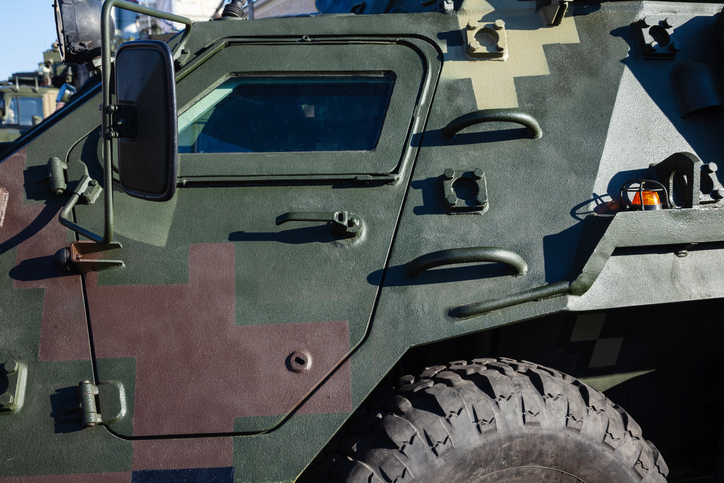
MIL-SPEC coatings are mandatory surface treatments that protect finished defense components from corrosion, chemical exposure, and environmental degradation that would rapidly compromise raw metal in military operational conditions.
A fully machined, welded, and inspected part is still not a finished defense component. Raw metal exposed to the environmental demands of military deployment, including salt spray, high humidity, chemical solvents, UV radiation, and repeated thermal cycling, will degrade rapidly without the correct surface treatment. This phase of defense manufacturing is consistently underestimated in commercial environments and heavily scrutinized by defense prime contractors.
What Does a MIL-SPEC Chemical Conversion Coating Do?
MIL-SPEC chemical conversion coatings alter the surface chemistry of the metal substrate to create a chemically bonded, corrosion-resistant layer. The most common specification for aluminum components is MIL-DTL-5541, which covers chromate conversion coating (Type I) and non-chromate alternatives (Type II).
These coatings serve three critical, simultaneous functions:
- Corrosion resistance: The conversion layer prevents oxidation and protects aluminum substrates in salt spray, humidity, and chemical environments that would otherwise rapidly degrade the base material.
- Adhesion promotion: Conversion coatings substantially improve paint and primer adhesion, a requirement for tactical and aerospace assemblies that receive additional topcoat systems.
- Electrical conductivity: Unlike hard anodized coatings, chemical conversion coatings maintain the base metal’s electrical conductivity, which is required for EMI/RFI shielding on electronic assemblies and military enclosures.
What Other Defense Finishing Processes Are Commonly Used?
Beyond chemical conversion coatings, defense programs frequently specify additional finishing processes based on the operational environment and engineering requirements:
- Type III hard anodizing for wear resistance on aluminum components subject to abrasion or repeated mechanical contact
- Electroless nickel plating for combined corrosion and wear resistance on steel and aluminum components requiring tight dimensional control after coating
- Chromate-free Alodine alternatives where RoHS environmental compliance is required alongside MIL-SPEC performance levels
- Tactical and Low Observable finishes that minimize optical signature and radar cross-section for field-deployed assets
- Conformal coatings for electronic subassemblies operating in high-humidity, chemical, or salt-laden environments
Why Does In-House Finishing Reduce Defense Program Risk?
Keeping MIL-SPEC finishing processes natively integrated with machining and fabrication operations is a strategic supply chain advantage with a direct impact on both lead time and traceability integrity.
When components are shipped to a third-party finishing facility, each of the following risks increases:
- Transit damage and surface contamination of precision-machined interfaces
- Documentation handoff failures between facilities operating under separate quality systems
- Extended lead times from transportation, queue scheduling, and re-inspection requirements upon return
- Chain of custody breaks that complicate traceability compliance during program audits
An end-to-end manufacturing partner that performs MIL-SPEC finishing in-house eliminates each of these exposure points. The component moves from final machining directly to the coating line under continuous documentation control, with the same quality system governing every step of the transition.

How Quality Assurance Works in Defense Manufacturing
Quality assurance in defense manufacturing is a continuous framework embedded into every phase of the production lifecycle. It begins during design integration and concludes only upon delivery documentation. It is not a final inspection checkpoint at the end of the line.
AS9100: What It Covers and Why It Matters
AS9100 is the quality management standard specifically designed for aerospace and defense production. It extends the ISO 9001 framework with requirements specific to the risk profile of this sector: configuration management, counterfeit parts prevention, First Article Inspection (FAI), and advanced product quality planning.
Working with AS9100-certified defense manufacturers means documented procedures govern every step of production, objective evidence requirements ensure actions are recorded and not merely claimed, and root cause analysis protocols address every nonconformance systematically. The certificate itself is the minimum entry threshold. The operational maturity of the quality system is what actually determines program risk.
ITAR Compliance and Controlled Data Security
ITAR-compliant manufacturing ensures that sensitive technical data, engineering drawings, and controlled design documentation are protected from unauthorized access or export. This is a legal requirement for companies serving the U.S. defense market, with significant civil and criminal penalties for non-compliance.
For procurement teams, verifying a vendor’s current ITAR registration status and their documented controls for handling Controlled Unclassified Information (CUI) is a fundamental qualification step before sharing any controlled technical data.
First Article Inspection and In-Process Verification
Before full-scale production begins, a First Article Inspection (FAI) validates that the manufacturing process consistently produces parts that conform to all engineering specifications. FAI is documented proof of process capability, not simply an initial approval event. Every dimension, finish specification, and material requirement called out on the engineering drawing must be verified and recorded.
In-process verification at critical operations, including key dimension checks, weld inspections, and coating thickness measurements, provides real-time quality feedback that prevents nonconformances from propagating through the build. Combined with final inspection using calibrated, traceable measurement equipment, this layered approach ensures that only conforming components advance to shipment.
CMMC and Cybersecurity in the Defense Supply Chain
The Cybersecurity Maturity Model Certification (CMMC) framework has added a cybersecurity compliance dimension to defense manufacturing qualification. Manufacturers handling CUI on defense programs must implement and certify both technical and procedural cybersecurity controls at the CMMC level required by their program contracts.
For prime contractors and procurement teams, a supplier’s CMMC posture is increasingly a baseline qualification criterion alongside traditional certifications such as AS9100 and ITAR registration.
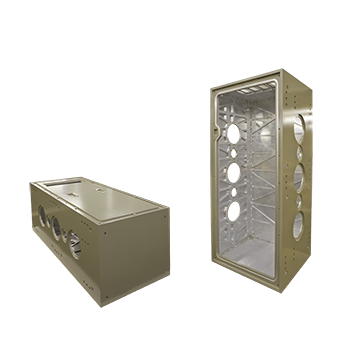
How Military Enclosures Are Built to Spec
Military enclosures are housings, chassis, and protective assemblies designed to protect sensitive electronics, communications systems, and precision instrumentation in defense operational environments. They represent one of the most technically demanding applications in defense manufacturing because they must simultaneously satisfy mechanical, environmental, thermal, and electromagnetic compatibility requirements.
What Standards Apply to Military Enclosures?
Defense enclosures are typically designed and tested to MIL-STD-810 for environmental engineering, which covers shock, vibration, thermal exposure, altitude, humidity, sand, dust, and a wide range of other operational stressors. Enclosures housing electronic equipment frequently also require compliance with MIL-STD-461 for electromagnetic compatibility, ensuring the enclosure prevents both unintended emissions and susceptibility to external electromagnetic interference in its operational environment.
IP ratings and NEMA ratings may be specified in addition to MIL-STD requirements for field-deployable enclosures where ingress protection against water and particulate contamination must be documented and verified.
What Manufacturing Capabilities Does a Defense Enclosure Require?
Producing a conformant military enclosure requires coordinating multiple disciplines across the production chain:
- Sheet metal forming and CNC machining for enclosure bodies, covers, and internal structural frames that meet tight flatness and parallelism requirements
- Precision-machined interface features for connector cutouts, EMI gasket grooves, and mating surface profiles that require tight dimensional control
- Certified welding for structural joints requiring full-penetration welds, pressure seals, or hermetic integrity
- MIL-SPEC surface finishing for corrosion protection and EMI shielding continuity across all mating surfaces
- Thermal management integration, including heatsink machining, ventilation aperture design, and thermal interface surface preparation
When all of these processes are executed under one roof with a single quality system governing every step, the lead time, traceability, and documentation management of military enclosure programs become substantially more efficient and far less prone to supplier coordination failures.
What Are the Biggest Supply Chain Risks in Defense Manufacturing?
The most persistent supply chain risks in defense manufacturing stem from fragmented vendor structures, inadequate documentation practices, and insufficient engineering change control. Understanding these risks helps procurement teams ask better qualification questions and write more effective supplier requirements before a program starts.
Fragmented Supply Chains and Traceability Gaps
The most pervasive risk in defense manufacturing is fragmentation. When a single component moves through multiple vendors for machining, welding, NDT, and finishing, the probability of a traceability gap increases at every handoff. Lost lot numbers, undocumented handling events, and documentation failures between facilities are common in fragmented supply chains. These issues typically surface during program audits or government surveillance visits at the worst possible time.
Every inter-facility transfer is also a physical risk event. Precision-machined surfaces can be contaminated, scratched, or otherwise compromised in transit. Sensitive coating chemistry can be compromised by improper packaging or environmental exposure during shipping. These are not hypothetical concerns. They are recurring quality escape sources in programs that rely on fragmented supply chains.
Engineering Change Management Failures
Defense programs routinely issue engineering changes after production has started. Managing those changes without producing nonconforming material or creating documentation gaps requires a formal engineering change control process that is directly integrated with the production traveler and quality records. Vendors without this integration create program risk with every change notice they receive because there is no reliable mechanism to prevent the previous revision from being built after the change is issued.
Counterfeit Parts Prevention
Counterfeit and substandard components in the defense supply chain are a well-documented, ongoing threat. Non-compliant fasteners, fraudulently represented raw materials, and counterfeit electronic components have all been identified in defense programs with serious program and legal consequences. DFARS-compliant sourcing combined with rigorous incoming inspection and MTR verification are the primary controls available, and they only work when applied consistently across every procurement action without exception.

How to Choose the Right Defense Manufacturing Partner
Selecting a manufacturing partner for defense programs is a risk management decision, not a purchasing transaction. The right partner is the one that demonstrably reduces the probability of a compliance failure, a schedule miss, or a quality escape in your program.
Required Certifications and Registrations
At minimum, a qualified defense manufacturing partner should hold and maintain:
- AS9100 certification (current revision, with aerospace and defense scope clearly defined in the certificate)
- ITAR registration with documented data security controls for CUI handling
- DFARS compliance procedures for specialty metal procurement with supporting MTR management
- Applicable process qualifications include AWS D17.1 for welding and Nadcap certification for specialty processes where required by program specification
- CMMC compliance at the level required by your program’s contractual data requirements
A vendor that cannot immediately produce current documentation for each of these is not a qualified defense manufacturing partner, regardless of their capabilities on the shop floor.
Vertical Integration and In-House Capabilities
The fewer external subcontractors a manufacturing partner relies on, the lower your supply chain risk. A partner that performs precision machining, welding, fabrication, and MIL-SPEC finishing in-house offers shorter lead times, simpler program management, and substantially better traceability integrity than one that ships components between multiple facilities for different processes.
When evaluating vendors, ask directly: which processes do you perform in-house, and for which processes do you rely on approved subcontractors? The answer identifies exactly where your traceability chain is most exposed and where documentation gaps are most likely to occur during the production cycle.
Engineering Collaboration Capability
Defense programs evolve. The ability of a manufacturing partner to engage your engineering team early in the design cycle, provide design-for-manufacturability feedback, and absorb engineering changes without schedule disruption is a significant program management differentiator. Partners with experienced application engineers who can independently interpret complex GD&T callouts on defense drawings reduce the back-and-forth that extends lead times and creates drawing revision control risks.
Quality System Operational Depth
Look beyond the AS9100 certificate to the actual quality system in operation. Specific questions to ask include:
- How does the vendor manage First Article Inspections and document the results?
- What NDT capabilities are available in-house, and which require subcontractors?
- How are nonconformances documented, dispositioned, and root-caused?
- How are engineering changes controlled in the production traveler?
The answers to these questions reveal the actual maturity of the quality system, not just whether the certificate is current.
Mission Readiness Starts Before the First Cut
Defense manufacturing is an end-to-end discipline where every phase builds directly on the last. From the moment a raw material is received and its MTR is verified against the engineering specification, through precision machining, certified welding, MIL-SPEC surface finishing, and final quality documentation, the chain of accountability must remain unbroken.
The path from raw material to mission-ready component is not a straight line. It passes through regulatory compliance requirements, materials engineering decisions, precision machining operations, specialized joining processes, surface chemistry treatments, and layered quality verification. A failure at any point in that chain can compromise the integrity of the entire asset.
For procurement professionals and engineers responsible for defense programs, the most reliable way to protect program integrity is to select a manufacturing partner with the vertical integration, current certifications, and operational agility to manage that chain from beginning to end. The hidden costs of fragmented supply chains, in schedule risk, documentation gaps, and potential quality escapes, consistently exceed the apparent cost savings of sourcing from multiple lower-tier vendors.
When the component must perform correctly the first time, in the most demanding possible operational environment, mission readiness is a decision that gets made during the partner selection process, long before production begins.
Ready to Build Your Next Defense Program on a Stronger Foundation?
NAMF provides end-to-end defense manufacturing capabilities, from DFARS-compliant raw material sourcing and precision CNC machining to certified welding and MIL-SPEC surface finishing, all under one AS9100-certified roof.