- The Materials Challenge: Beyond Mild Steel
- Quality Control That Goes Deeper
- Military Specifications and Regulatory Compliance
- Defense Welding: Advanced Certification Requirements
- Specialized Welding Processes
- The Engineering Integration Factor
- First Article Inspection and Process Validation
- Why This Matters for Your Projects
- Moving Forward with Confidence
- Frequently Asked Questions
Key Takeaways
- Defense welding demands specialized certifications beyond standard AWS credentials, including expertise in exotic materials, advanced NDT methods, and strict military specifications that commercial welding doesn’t require.
- Military-grade fabrication requires NADCAP accreditation, ITAR compliance, and rigorous documentation protocols where every weld undergoes molecular-level inspection and complete traceability.
- Choosing a defense fabrication partner with proven accreditations and decades of specialized experience protects mission-critical projects from catastrophic failures that standard welding expertise cannot prevent.
You can pass a standard welding certification and still be completely unprepared for defense work.
The gap between general welding and defense welding is wider than most people realize. When you’re joining metal for a commercial building, a failed weld means costly repairs. When you’re welding components for a naval vessel or armored vehicle, a failed weld can cost lives.
Defense welding operates under different rules. The materials are more exotic. The standards are stricter. The consequences of failure are unacceptable.
Here’s what separates defense welding from everything else. And why your standard certifications won’t cut it.
The Materials Challenge: Beyond Mild Steel
Standard welding certifications teach you to work with common materials. Carbon steel. Stainless steel. Aluminum in basic applications.
Defense projects demand expertise in materials you won’t see in typical fabrication work.
Titanium alloys. High-strength aluminum variants. Nickel-based superalloys. Armor-grade steel. Each material needs specific techniques, precise heat control, and a deep understanding of metal properties.
When you work with titanium, you need to understand how it reacts to oxygen at high temperatures. You need to know why it requires inert gas shielding on both sides. Modern CNC manufacturing facilities use precise heat control that goes beyond what standard certifications teach.
The American Welding Society (AWS) offers specialized certifications for these materials. But even those represent baseline knowledge. Defense contractors often need additional training and proven competence in their specific applications.
Quality Control That Goes Deeper
Your standard certification proves you can create a visually acceptable weld. It shows your welds meet basic strength requirements.
Defense welding requires you to prove the weld’s integrity at a molecular level.
Non-destructive testing (NDT) becomes mandatory, not optional. You need to understand radiographic testing, ultrasonic inspection, magnetic particle testing, and liquid penetrant inspection. More importantly, you need to know which method to use for each application and why.
At NAMF, we maintain quality control processes that exceed standard industry requirements. Our work in defense and aerospace demands it. Every weld undergoes inspection protocols that would seem excessive in commercial work. But these inspections are absolutely necessary when the end product protects lives.
The inspection requirements go beyond the welds themselves. You need to document everything. Heat input. Interpass temperature. Filler material lot numbers. Environmental conditions during welding. This level of record-keeping doesn’t exist in standard welding work.
Military Specifications and Regulatory Compliance
Commercial welding follows building codes and industry standards. Defense welding follows MIL-SPEC and MIL-STD requirements. These military codes make commercial standards look simple.
These military specifications cover everything. Welding procedures. Welder qualification. Inspection criteria. They’re not suggestions. They’re mandatory requirements backed by federal oversight.
ITAR compliance adds another layer of complexity. The International Traffic in Arms Regulations govern how you handle defense-related materials and information. You can’t just learn welding techniques. You need to understand information security, export controls, and how to stay compliant with regulations.
Many defense projects require security clearances. Your technical skills matter. But so does your ability to work in a controlled environment. Even discussing your work outside specific channels can violate federal law.
Standard welding certifications don’t prepare you for this regulatory world. You need additional training. Background checks. Ongoing compliance education.
Defense Welding: Advanced Certification Requirements
The AWS Certified Welding Inspector (CWI) certification represents a significant step beyond basic welder certification. Defense work often requires it.
A CWI doesn’t just weld. They understand welding codes. They can interpret drawings and specifications. They know how to verify that welds meet exact standards. They serve as the quality checkpoint between the welder and the final product.
But even CWI certification is just the beginning for defense applications.
NADCAP accreditation represents the gold standard in aerospace and defense manufacturing. The National Aerospace and Defense Contractors Accreditation Program audits manufacturers. They accredit only those who meet the most stringent quality requirements.
At NAMF, we hold NADCAP and NAVSEA certifications. These certifications didn’t come easy. They require proven competence across every aspect of our operations. Welding procedures. Quality control. Documentation practices.
When you choose a defense fabrication partner, these accreditations matter. They tell you the company has proven their capabilities to independent auditors who understand the stakes.
Specialized Welding Processes
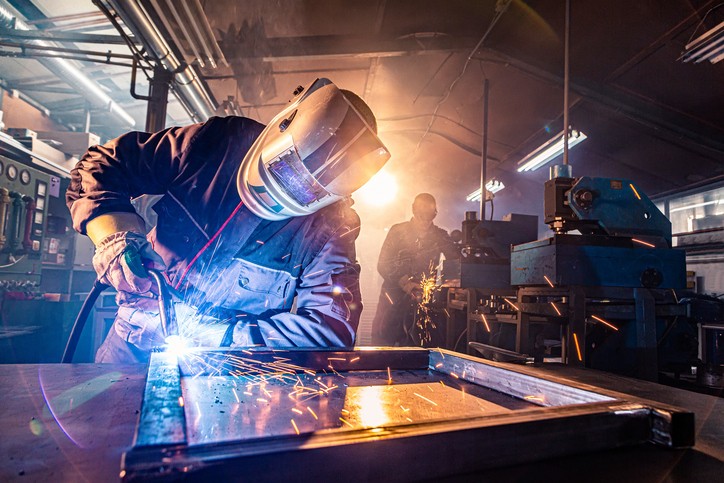
Defense applications often require welding processes beyond what standard certifications cover.
Dip brazing is one example. This specialized process joins aluminum components by immersing them in molten salt. It creates joints that combine strength with thermal conductivity. It’s particularly valuable for ruggedized enclosures used in defense electronics.
NAMF specializes in aluminum dip brazing for defense and aerospace applications. Understanding the various types of brazing methods is essential for selecting the right joining technique. This expertise came from decades of focused experience in high-reliability applications where failure is not an option.
Electron beam welding. Laser welding. Friction stir welding. Some facilities also offer brass welding for specialized components requiring copper alloy materials. Defense work often requires these advanced processes, each with its own certification requirements and learning curve.
You can’t finish a standard welding certification course and perform these processes. You need specialized training. Expensive equipment. Extensive practice under expert supervision.
The Engineering Integration Factor
Standard welding treats you as a technician who follows instructions. Military machining and defense welding often require you to think like an engineer.
You need to understand Design for Manufacturability (DFM) principles. You need to spot when a design creates welding challenges and communicate those concerns effectively. Rapid prototype machining helps test designs before full production begins. You need to suggest alternatives that maintain design intent while improving weldability.
This collaborative approach requires knowledge beyond welding technique. You need to understand stress analysis. Thermal expansion. Corrosion resistance. How your welding choices affect the final product’s performance.
At NAMF, we offer collaborative engineering support to refine designs before production begins. This approach optimizes components for manufacturability, durability, and performance. It’s the kind of value-added service that separates defense fabrication from basic welding work.
First Article Inspection and Process Validation
When you start a new defense welding project, you can’t just begin production. Many contract manufacturing services require you to prove your process works through First Article Inspection (FAI).
FAI checks that your welding procedures, equipment, and personnel can consistently produce parts that meet all specifications. Achieving brazing certification alongside welding credentials demonstrates comprehensive metal joining expertise. You weld sample parts, subject them to extensive testing, and document everything in detail.
Only after the customer approves your first article can you begin production. Even then, you need to keep the exact same procedures. The same equipment settings. The same quality controls throughout the production run.
Standard welding work doesn’t operate this way. You prove you can weld once during certification. Then you’re trusted to maintain that skill. Defense work requires ongoing validation and documentation.
Environmental and Operational Extremes
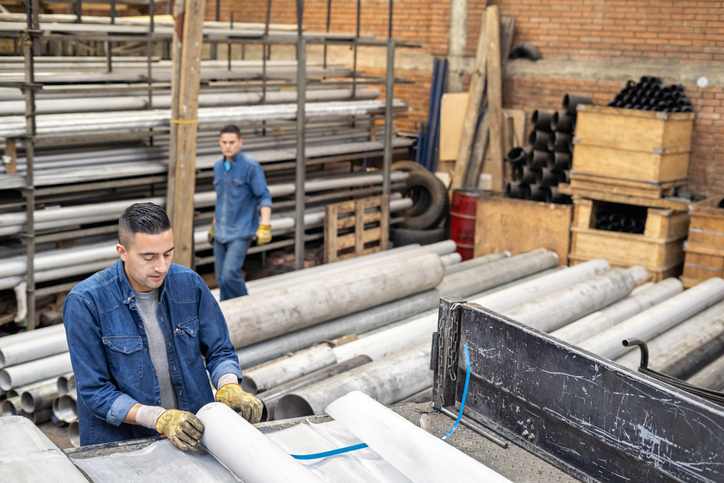
Commercial welds need to hold up under normal use conditions. Defense welds need to perform in environments that would destroy standard work.
Extreme temperatures. High vibration. Salt water exposure. Explosive shock. Radiation. Defense components face conditions that push materials to their limits.
Your welding needs to account for these extremes. You need to understand how temperature changes affect joint strength. You need to know which filler materials resist corrosion in saltwater. You need to create welds that stay strong at temperatures that would weaken standard joints.
This knowledge comes from specialized training and experience, not from standard certifications.
The Continuous Learning Requirement
Standard welding certifications expire and require renewal. But the knowledge base stays relatively stable. Defense welding evolves constantly.
New materials enter service. Specifications get updated. Inspection techniques improve. Regulatory requirements change.
You need to commit to continuous learning. Attend industry conferences. Complete specialized training courses. Stay current with military specification updates. Participate in professional organizations like AWS that provide ongoing education.
Welders and inspectors who succeed in defense work treat their education as a career-long process. Not a one-time certification event.
Why This Matters for Your Projects
If you’re looking for welding services for defense or aerospace applications, understanding these differences protects your project.
A fabricator with standard certifications might offer a lower price. They might promise quick turnaround. But if they lack the specialized knowledge, equipment, and accreditations defense work requires, you’re not saving money. You’re creating risk.
Failed welds in defense applications create catastrophic consequences. Mission failure. Equipment loss. Personnel casualties. The cost of getting it wrong far exceeds any potential savings from choosing a less-qualified fabricator.
At NAMF, our 40-plus years of experience in defense and aerospace fabrication give us a deep understanding of what these projects need. Our dual manufacturing facilities in Fairfield, NJ, and Ronkonkoma, NY, provide backup capacity and scalability. Our NADCAP, NAVSEA, and ISO accreditations prove we meet the highest industry standards.
We don’t just meet specifications. We understand why those specifications exist and what happens when you fail to meet them.
Moving Forward with Confidence
Defense welding requires more than standard certifications. The work demands more than standard competence.
The materials are more challenging. The quality requirements are more stringent. The regulatory environment is more complex. The consequences of failure are more severe.
When you choose a defense fabrication partner, look beyond basic welding certifications. Ask about specialized training. Verify their accreditations. Understand their quality control processes. Confirm they have experience with your specific materials and applications.
The right partner brings technical expertise. Regulatory compliance. Proven performance in high-stakes applications. They understand that in defense work, good enough isn’t good enough.
Your mission-critical projects deserve fabrication partners who meet the highest standards. Partners who invest in specialized training. Who maintains strict quality control. Who prove their capabilities through independent accreditation.
That’s the difference between standard welding and defense welding. That’s why certifications alone don’t tell the whole story.
Ready to Partner with Defense Welding Experts?
NAMF delivers precision metal fabrication with the certifications, experience, and quality control your defense projects demand. Let’s discuss how our specialized capabilities can support your mission-critical requirements.