Key Takeaways
- A professional CNC laser cutting service should give you specific numbers on tolerance, material thickness, and equipment, not just vague promises.
- ISO 9001, AS9100D, and Nadcap certifications are non-negotiable for aerospace and defense parts, and you can verify them independently through Nadcap’s directory.
- Experienced operators and in-house capabilities like welding and brazing reduce the risk of missed tolerances and scheduling delays.
When you’re vetting a CNC laser cutting service for an aerospace or defense project, price alone tells you almost nothing. Two shops can quote the same job at wildly different rates. Yet both may claim the same results. The real gap usually comes down to five things. Those are laser technology, certifications, staff experience, tolerance levels, and how they treat you before the contract is even signed.
Getting this evaluation right matters. A laser-cut part that’s off by a few thousandths of an inch can fail inspection. It can delay a production line. In safety-critical defense manufacturing work, it can put people at risk. Here’s what to check before you commit.
What Types of CNC Laser Cutting Technology Should You Ask About?
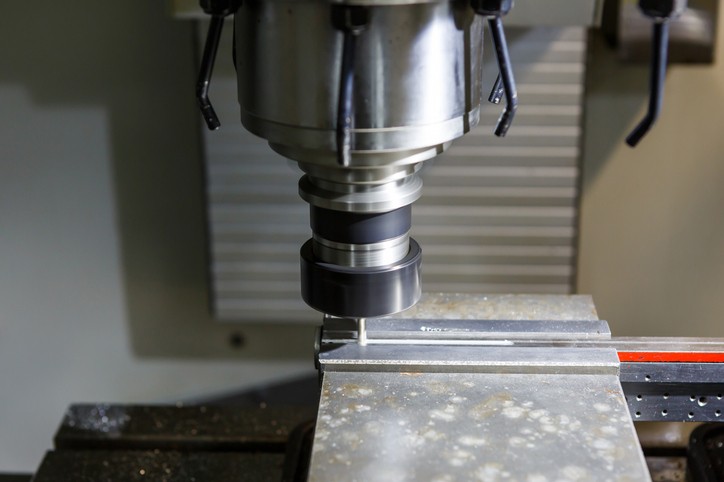
Most professional shops run fiber laser or CO2 laser systems. The difference affects your cost and lead time. Fiber lasers cut reflective metals like aluminum, brass, and copper faster than older CO2 machines. They also cut with a tighter beam. That’s why fiber lasers have become the industry standard for precision metal fabrication.
A shop worth hiring can tell you exactly what its equipment can do. It won’t just say it “has a laser.” For example, a 4 kW fiber-optic laser can typically cut 5052 and 6061 aluminum alloys up to 1.5 inches (3.81 cm) thick. It can handle sheets as large as 96 by 144 inches (365.76 cm). It can hold tolerances as tight as 0.003 inches (0.08 mm) on defense-grade parts. If a sales rep can’t give you numbers like these, that’s a sign they don’t run the equipment themselves.
Ask directly whether the shop cuts flat sheets only. Find out if it can also handle tubes, structural shapes, and thicker plates. Some providers advertise broad fabrication and manufacturing capabilities but subcontract the laser work out. That adds a hidden step, a hidden markup, and one more place for delays to creep in.
What Certifications Should a CNC Laser Cutting Service Hold?
A qualified provider should hold ISO 9001 for quality management. It should also hold AS9100D for aerospace-specific quality systems, plus Nadcap accreditation for approved special processes. For aerospace and defense buyers, these are non-negotiable, not nice-to-haves.
Confirm certifications directly. Don’t just take a sales pitch at face value:
- ISO 9001: quality management systems and consistent, repeatable processes
- AS9100D: the aerospace industry’s standard on top of ISO 9001
- Nadcap: third-party approval for special processes like laser cutting, welding, and brazing
Nadcap keeps a public directory of accredited suppliers. You can verify a shop’s status yourself instead of relying on their word. A provider with real military machining experience will expect this question. It will have the paperwork ready before you even ask.
Why Does In-House Equipment Quality Matter?
Outdated laser equipment often struggles with beam consistency. That shows up later as inconsistent tolerances on your finished parts. A shop running older or poorly maintained machines may charge aerospace-grade prices while delivering commercial-grade accuracy. You won’t know the difference until a part fails inspection.
Ask when the laser system was installed and how often it’s serviced. Ask whether the shop owns its equipment or leases time on someone else’s floor. Providers that also run in-house defense welding and finishing lines tend to invest more in their core cutting equipment. One weak process slows down the whole shop.
How Do Worker Qualifications Affect Your Timeline?
Skilled machine operators catch problems before they become scrap. That keeps your project on schedule and your reject rate low. Less experienced staff can run the same machine and still miss tolerance. That’s because laser cutting quality depends as much on programming and setup as it does on the hardware.
A shop with a deep bench of trained operators can also speak knowledgeably about your industry. That could be aerospace, medical, or defense manufacturing. If a sales contact can’t answer basic technical questions about your part, ask to speak with someone from the shop floor first.
What Accuracy and Tolerance Levels Should You Expect?
Tolerance is how closely a finished part matches its design specification. It’s the single best predictor of whether a shop can handle complex shapes without rework. High-end aerospace and defense clients typically need tolerances in the thousandths of an inch, not the sixteenths.
A provider that quotes specific tolerance numbers, rather than vague terms like “high precision,” actually measures its own output. This matters most on parts destined for military enclosures or other components where a loose fit can compromise shielding, sealing, or strength.
Why Do Aerospace and Defense Projects Need Specialized Experience?
CNC laser cutting isn’t one-size-fits-all. Different industries carry different risk profiles and compliance rules. Aerospace and defense work demands documentation, traceability, and testing that a general commercial fabricator may not be set up to handle.
Some providers claim they meet these standards just to win the bid, even when they aren’t properly certified. Checking Nadcap’s directory before you sign protects you from that risk. A shop that also offers aluminum dip brazing services alongside laser cutting is a good sign. It shows the provider has invested broadly in defense-grade processes, not just one.
Metal fabrication is a skilled trade. Not every company advertising a CNC laser cutting service is actually qualified for aerospace or defense work. Doing this research upfront, before a purchase order goes out, is what separates a smooth project from an expensive redo.
NAMF runs its own 4 kW fiber-optic laser cutting equipment. We also handle welding, brazing, and full NJ metal fabrication work at our Fairfield, NJ, and Ronkonkoma, NY, facilities. Contact us to talk through your CNC laser cutting service needs and get a quote built around your real requirements.
Get a Laser Cutting Quote Built Around Your Tolerances
NAMF cuts aluminum, stainless steel, brass, and copper on in-house fiber-optic laser equipment, backed by ISO 9001, AS9100D, and Nadcap certification. Tell us about your part, and we’ll walk you through exactly what our process can hold.