- What Are Military Enclosures?
- Why Customization Is Non-Negotiable in Defense
- Manufacturing Processes That Define Reliability
- Surface Finishing and Corrosion Protection
- Engineering Parameters That Drive Protection Performance
- The True Cost of Cutting Corners on Protection
- What to Look for in a Military Enclosure Manufacturer
- Frequently Asked Questions
Key Takeaways
- Custom military enclosures must be engineered for each specific application, environment, and threat type to ensure mission success.
- Specialized processes like dip brazing, precision machining, and surface treatments such as alodine coating are critical to long-term performance.
- Choosing a manufacturer with full in-house capabilities reduces lead times, program risk, and total cost.
When military equipment fails in the field, the stakes are not measured in dollars. They are measured in missions and lives. At the center of every dependable defense system is a component most people never see: the custom military enclosure. These precision-engineered housings protect sensitive electronics from extreme heat, arctic cold, corrosive environments, electromagnetic interference, and battlefield shock.
At NAMF, we have spent over four decades building custom military enclosures for defense contractors and aerospace OEMs across the country. That experience has taught us one consistent lesson: the difference between a system that performs and one that fails in the field often comes down to the quality of its protective housing.
This guide covers what defense engineers and procurement managers need to know before selecting a manufacturer, including the processes, standards, and capabilities that separate mission-critical enclosures from everything else.
What Are Military Enclosures?
Military enclosures are ruggedized protective housings designed to shield electronics and sensitive components from environmental, physical, and electromagnetic threats in defense applications. Unlike standard commercial housings, military enclosures must meet strict government specifications including MIL-STD-810 for environmental conditions and MIL-STD-461 for electromagnetic compatibility.
These enclosures are deployed across a wide range of defense platforms: ground vehicles, naval vessels, aircraft, communications systems, weapons guidance assemblies, and radar equipment. Each application demands a different combination of electromagnetic shielding, thermal management, material selection, and mounting configuration.
What Threats Do Military Enclosures Protect Against?
Modern defense electronics face a convergence of threats that commercial housings simply cannot handle. Temperature extremes range from -65°F (-53.89°C) to 160°F (71.11°C). Salt spray, sand, dust, humidity, and sustained vibration are constants in field operations. Electromagnetic threats, including deliberate jamming and interference from nearby systems, must be blocked to keep sensitive electronics operational.
Physical impact, blast overpressure, and ballistic threats add another layer of complexity. A properly designed military enclosure must address all of these requirements simultaneously without exceeding the platform’s weight or size budget.
Why Customization Is Non-Negotiable in Defense
Off-the-shelf enclosures work for commercial applications where tolerances are forgiving and conditions are predictable. Defense applications offer neither of those luxuries.
Every military platform comes with a unique combination of spatial constraints, weight budgets, thermal loads, and threat profiles. A naval radar housing must handle persistent salt spray and dense electromagnetic noise from shipboard systems. An airborne targeting unit must be as light as possible while surviving vibration and shock loads that would destroy a commercial product. A ground vehicle system must endure road shock, dust, and temperature swings across multiple operating environments.
Custom chassis fabrication solves this problem by allowing engineers to design the enclosure around the specific demands of the application rather than the other way around. Wall thickness, internal geometry, sealing systems, mounting interfaces, and material selection are all determined by one purpose: reliable performance in the exact environment where the system will operate.
When a project involves an unusual form factor, a legacy platform with limited space, or a new system with unprecedented performance requirements, standard enclosures cannot accommodate the need. In defense manufacturing, customization is not a premium option. It is a baseline requirement.
Manufacturing Processes That Define Reliability
The performance gap between a reliable military enclosure and one that fails in qualification testing is often rooted in manufacturing. Processes that are acceptable for industrial or commercial applications frequently fall short of what defense and aerospace work demands.
Dip Brazing
Dip brazing is one of the most critical and least common manufacturing processes in defense enclosure production. It involves immersing precision-assembled aluminum components in a molten salt bath at tightly controlled temperatures, producing seamless, void-free joints with exceptional structural integrity and thermal conductivity.
Unlike conventional welding, which creates heat-affected zones and potential stress concentrations, dip brazing produces homogeneous bonds across the entire joint area. This makes dip-brazed assemblies significantly more reliable under vibration, thermal cycling, and shock loading. For ruggedized defense enclosures, this process is often the deciding factor in whether a design passes qualification testing.
Precision Machining
Achieving the tight tolerances required for EMI gasket grooves, cooling passages, and mating interfaces requires precision machining on multi-axis equipment. Features measured in thousandths of an inch determine whether an enclosure achieves the shielding effectiveness, thermal performance, and sealing integrity required by military specifications.
A CNC lathe and milling machine setup capable of 5-axis operation allows manufacturers to complete complex enclosure features in fewer setups, reducing dimensional variation and improving repeatability across production runs. For defense programs, this capability is a prerequisite for consistent qualification performance.
Fabrication and Machining
Effective defense enclosure manufacturing depends on treating fabrication and machining as a tightly controlled, sequential process rather than two separate activities handled by different vendors. Sheet metal forming, welding, and assembly are followed by precision machining to bring critical features to final dimensions. Separating these steps across multiple suppliers introduces tolerance stack-up errors and scheduling risk that can compromise an entire program.
Understanding welding vs fabrication is also important at the design stage. Welded assemblies introduce different residual stress profiles than brazed or mechanically assembled structures. Choosing the right joining method for each feature, based on its structural, thermal, and electromagnetic requirements, directly affects long-term reliability in service.
Surface Finishing and Corrosion Protection
Surface finishing is not a cosmetic step in military enclosure production. It is a functional requirement that determines how long the enclosure will hold up in the field.
Alodine Coating and Chemical Conversion
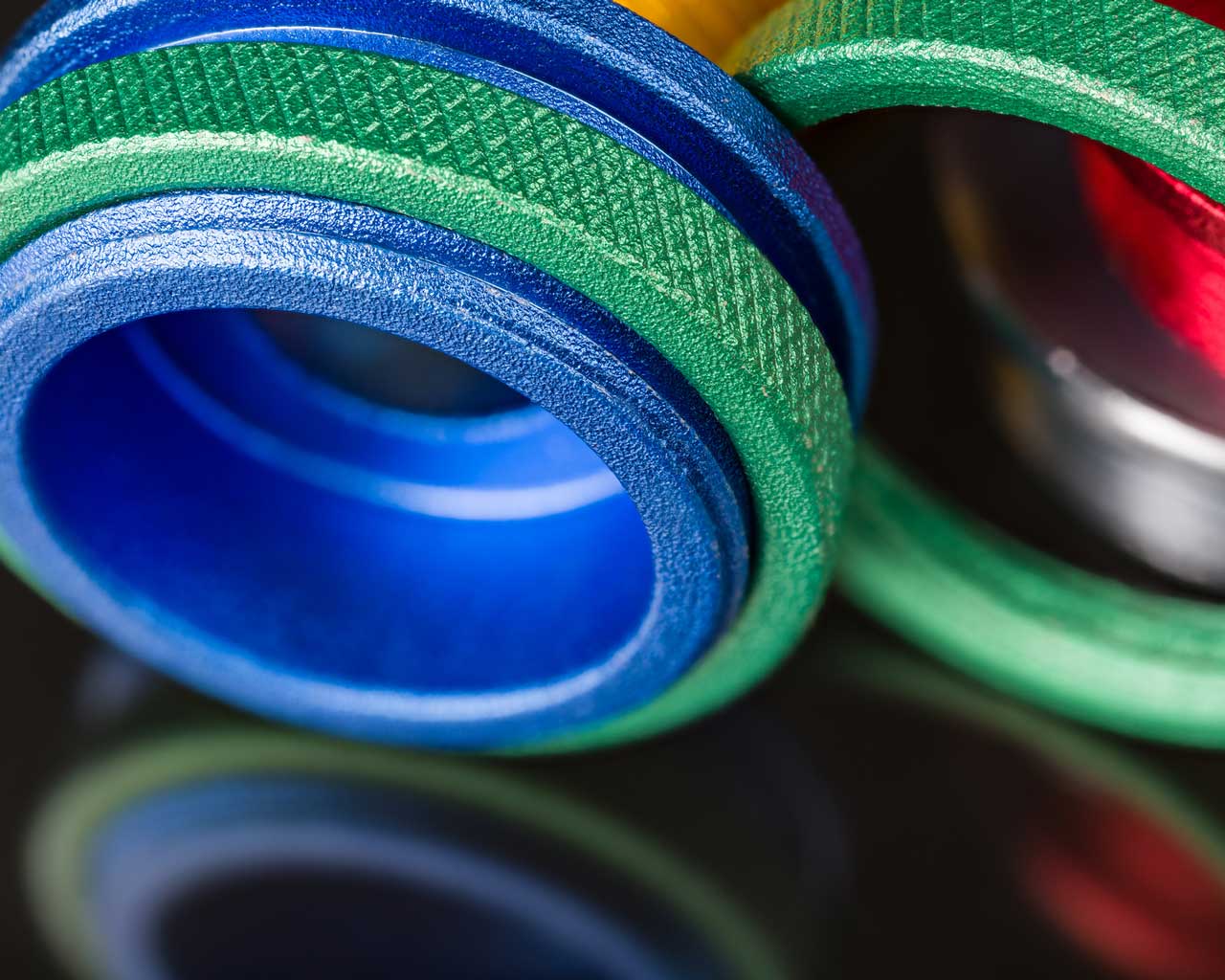
Alodine coating, also known as chemical conversion coating per MIL-DTL-5541, is the standard surface treatment for aluminum military enclosures. It creates a thin, corrosion-resistant oxide layer that also serves as an adhesion primer for paint and EMI shielding treatments. Without it, bare aluminum corrodes rapidly in salt spray, high-humidity, and chemically active environments.
The uniformity and thickness of the alodine layer are tightly controlled in defense applications. Variations in coating quality can compromise adhesion, corrosion protection, and electrical conductivity at seam interfaces, all of which affect long-term enclosure performance.
Steel Fabrication for High-Strength Components
When aluminum’s strength-to-weight ratio is insufficient for a given application, steel fabrication services provide an alternative for components that require higher structural rigidity. Steel is commonly used for mounting brackets, equipment rails, and external structural members in applications where load capacity outweighs the weight penalty.
Selecting the right material for each component in a military enclosure system requires understanding both the structural demands and the surface treatment options available for that material.
Brass Milling for Electrical Interface Components
Certain electrical interface components, including connector blocks, grounding studs, and EMI filter housings, benefit from brass milling due to brass’s electrical conductivity, machinability, and inherent corrosion resistance. In military enclosures, these components must be dimensionally precise and reliably conductive to maintain shielding performance at every interface point.
Engineering Parameters That Drive Protection Performance
Understanding the engineering criteria that govern military enclosure design helps defense engineers ask the right questions when evaluating suppliers.
Electromagnetic shielding effectiveness, measured in decibels across a specified frequency range, defines how well the enclosure blocks electromagnetic energy. Military-grade shielding typically requires 60 to 100 dB of attenuation, which demands precision-engineered gaskets, carefully controlled apertures, and seamless construction across every joint and seam.
Environmental sealing, expressed as an IP rating per IEC 60529 or a NEMA classification, defines resistance to dust, moisture, and contaminants. Most military applications require IP67 or higher, meaning complete dust exclusion and protection against temporary immersion.
Thermal management capacity, expressed in watts dissipated per unit temperature differential, determines whether internal electronics will remain within their operating limits under full load. Custom thermal solutions including conduction paths, heat pipes, and forced-air channels must be engineered for each specific heat load and ambient condition profile.
Structural integrity under MIL-STD-810 test conditions covers shock, vibration, and drop loading. Wall thickness, internal bracing, material selection, and mounting method all contribute to whether an enclosure passes or fails these qualification tests.
A shortfall in any one of these parameters can render an otherwise well-designed system unreliable in deployment. This is why effective military enclosure engineering considers all performance dimensions simultaneously rather than addressing each in isolation.
The True Cost of Cutting Corners on Protection
Defense programs that begin with cost-optimized, standardized enclosures frequently discover their limitations at the worst possible time: during qualification testing or after field deployment.
Redesigns triggered by enclosure failures are expensive. Program delays cost time and contract performance. Field retrofits in deployed systems cost multiples of what a properly engineered enclosure would have required at the outset. These are the hidden costs that defense procurement teams rarely account for when chasing initial savings.
Beyond schedule and budget impact, enclosure failures in the field put war fighters at risk. A communications system that fails because its housing could not handle a desert environment is not just a program problem. It is an operational failure with real consequences.
Aerospace metal fabrication for defense applications commands a premium because it is engineered to a standard where failure is not an acceptable outcome. The cost of building to that standard is always lower than the cost of failing to meet it after deployment.
What to Look for in a Military Enclosure Manufacturer
Choosing the right manufacturing partner is as important as the design itself. Several factors separate manufacturers capable of supporting defense programs from those who are not equipped to do so.
In-house capabilities matter most. A manufacturer that controls precision machining, dip brazing, surface finishing, and quality verification under one roof can maintain consistent standards across the entire production process. Outsourcing any of these steps introduces variability and program risk that are difficult to manage.
Certifications are non-negotiable. ITAR registration, AS9100D certification, NADCAP accreditation, and NAVSEA approvals indicate a manufacturer has been independently evaluated against the standards that defense programs require. These credentials are not optional for work in this sector.
Engineering collaboration capability separates manufacturers who execute drawings from those who contribute to the design process. A partner who can review designs early and flag issues related to manufacturability, tolerances, and material selection can prevent costly changes later in the program.
A single point of contact reduces the coordination burden on defense procurement teams managing multiple simultaneous programs. Suppliers who route every inquiry through multiple layers of administration introduce delays that active programs cannot afford.
Build Your Next Military Enclosure with NAMF
NAMF has been building custom military enclosures for defense contractors and aerospace OEMs since 1979. Our facilities in Fairfield, NJ, and Ronkonkoma, NY offer fully integrated in-house capabilities, including CNC milling, dip brazing, sheet metal fabrication, surface finishing, and quality verification. We hold ITAR registration, AS9100D certification, NADCAP accreditation, and NAVSEA approvals.
If your next defense program requires a ruggedized housing engineered to perform under real-world conditions, our team is ready to help from the first design conversation.