Key Takeaways
- Integrated fabrication and machining reduce dimensional errors by 80% and cut process alterations by 50% compared to separated operations
- Defense manufacturers eliminate costly handoffs, transportation damage, and coordination delays when fabrication and machining occur in one facility
- Single-source control of fabrication and machining simplifies quality compliance, accelerates timelines, and improves traceability for mission-critical components
Defense contractors often send parts to one shop for fabrication, another for machining, and a third for finishing. Each handoff adds time, introduces error, and multiplies the points where precision can drift.
Defense and aerospace sectors operate under conditions where failure isn’t an option. When you’re producing military enclosures for electronics or precision components for aircraft systems, the margin for error approaches zero.
Integrated fabrication and machining solves this problem.
Recent research on 5-axis additive/subtractive hybrid manufacturing shows 50% fewer process alternations and over tenfold efficiency improvement compared to conventional manual planning. More importantly, this integration achieves a surface quality of Ra 0.5–0.8 μm versus 6.2–8.3 μm for additive-only processes.
That’s an 80% improvement in dimensional accuracy.
The Real Cost of Separating Fabrication and Machining
Separating fabrication and machining introduces risk at every transition point.
Transportation damage happens. Parts get scratched, dinged, or mishandled between facilities. A precision-cut aluminum enclosure arrives at the machining shop with compromised surfaces.
Setup errors multiply. Each new facility means new fixtures, new measurements, and new opportunities for misalignment. Reference points from fabrication don’t automatically transfer to machining operations.
Lead times extend. You’re adding scheduling delays, shipping time, and coordination overhead of managing multiple vendors.
This pattern repeats in defense manufacturing. A project that should take three weeks stretches to six because parts move between facilities instead of workstations.
How Fabrication and Machining Integration Changes Everything
When fabrication and machining happen in one facility, the workflow transforms completely.
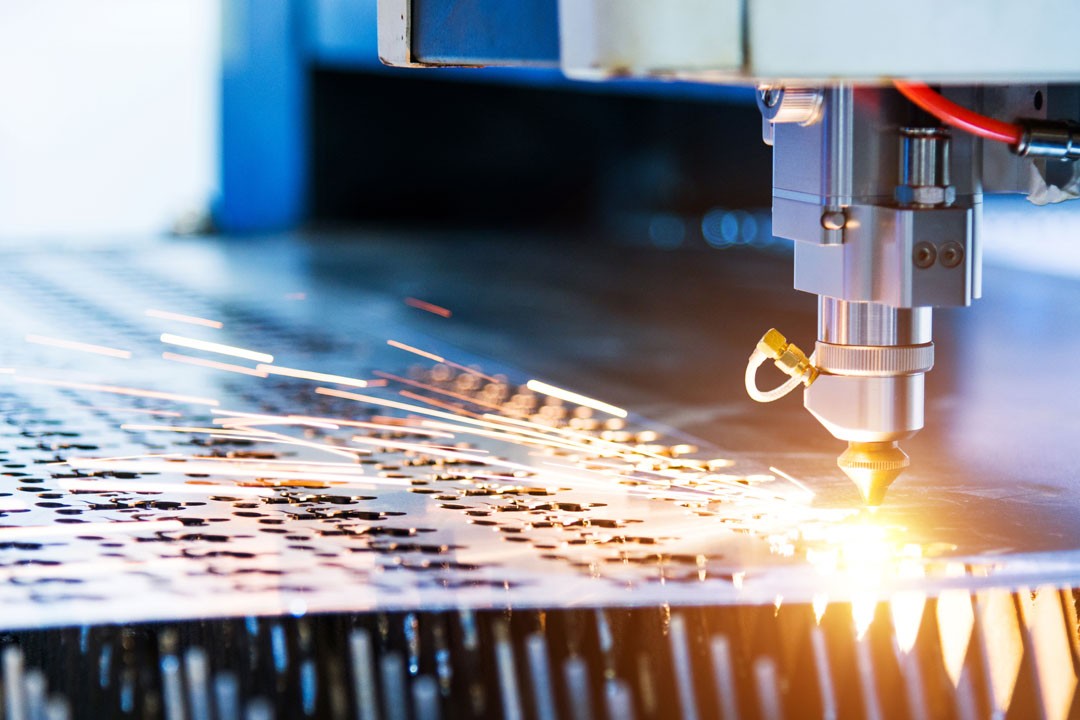
Dimensional reference stays consistent. The same coordinate system guides initial laser cutting through CNC machining. This continuity eliminates alignment errors from multi-vendor approaches.
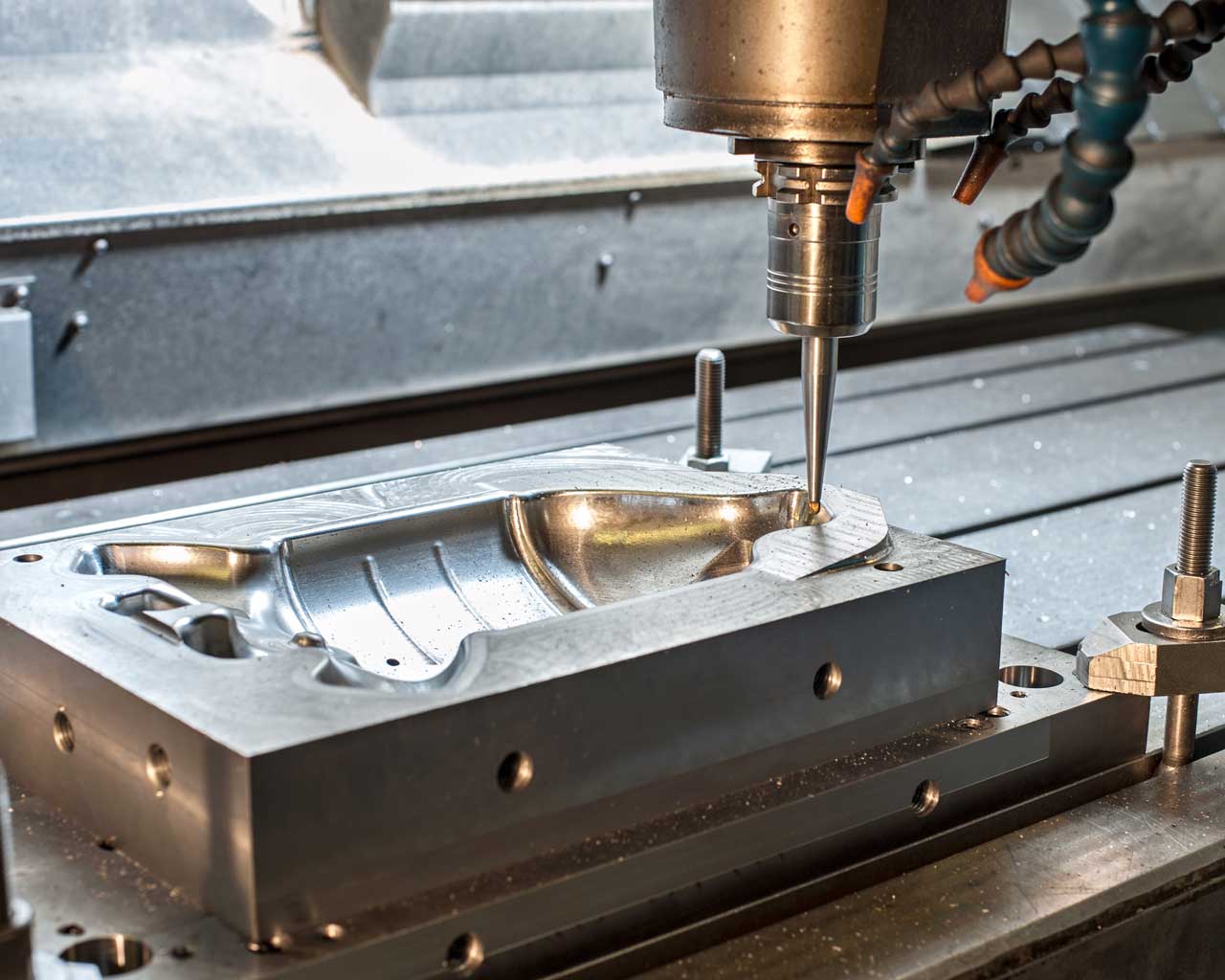
Material handling stays internal. Parts move from the press brake to the CNC mill without leaving the building. No packaging, shipping, or receiving inspection at another facility.
Quality control becomes continuous. You monitor quality throughout the manufacturing sequence instead of only at handoff points. Problems get caught earlier when they’re easier to fix.
Smart manufacturing makes this integration more valuable. When fabrication and machining equipment share data infrastructure, you optimize tool paths based on material properties observed during forming operations.
Specialized Processes in Integrated Facilities
Aluminum dip brazing shows why integration matters in defense applications.
This process creates hermetically sealed joints in 60 seconds with complete EMI shielding. Uniform heating eliminates warping and distortion from welding’s localized thermal stress.
Here’s what makes it work: You need precision machining before and after brazing.
Before brazing, components need tight tolerances for proper fit-up. After brazing, additional machining achieves final dimensions and adds features like mounting holes or connector interfaces.
When operations happen in separate facilities, coordination becomes challenging. The post-braze machining shop must understand how brazing affects dimensions and account for any distortion during the thermal cycle.
In an integrated facility, the same engineering team oversees the entire sequence. They design pre-braze machining with post-braze operations in mind and adjust processes based on how specific geometries respond to brazing cycles.
Meeting Critical Defense Timelines
Defense manufacturing operates under unique time pressures that demand streamlined processes.
Advanced manufacturing capabilities continue expanding across operational units. Major defense programs require faster turnaround times without compromising quality or compliance.
Critical timelines don’t accommodate multi-vendor coordination delays.
Integrated fabrication and machining compress schedules in ways separated processes can’t match. Parts that need forming, brazing, and precision machining flow through operations in days instead of weeks.
You eliminate vendor coordination. No waiting for machining shop capacity. No delays from missed shipments.
Parts move to the next workstation when the previous operation completes.
Quality Standards and Process Control
Defense and aerospace applications demand compliance with AS9100, ITAR, and MIL-SPEC requirements. Integrated manufacturing simplifies compliance.
When you control the entire process, you maintain one quality management system. Your First Article Inspection covers the complete manufacturing sequence. Your corrective action system traces problems to specific operations without crossing organizational boundaries.
Documentation becomes simpler. Instead of collecting quality records from multiple vendors, you generate a complete manufacturing history from one source.
This traceability matters for mission-critical applications. If problems emerge, you understand exactly what happened during manufacturing. Integrated operations provide that visibility.
Building Manufacturing Expertise
The scarcest skill in defense manufacturing isn’t technical capability—it’s accountability.
You need people who own processes, recognize drift, and make informed adjustments. This judgment develops through experience.
Integrated fabrication and machining builds this expertise.
When teams see how forming operations affect subsequent machining, they develop intuition about process interactions. Observing how material properties vary and propagate through manufacturing sequences builds knowledge that drives continuous improvement.
In separated processes, learning gets siloed. The fabrication shop understands forming but not machining. The machine shop understands cutting but not upstream production.
Integration breaks down silos and creates expertise spanning the entire process.
Your Manufacturing Strategy
For defense or aerospace components, integrated fabrication and machining offers clear advantages. The data proves this.
The question is whether your current supply chain delivers the precision, speed, and reliability your programs demand.
Evaluate your current process flow. Count the handoffs. Calculate time spent coordinating between vendors. Add up quality issues that trace to transition points.
Consider what changes when you eliminate those handoffs.
NAMF’s capabilities center on integrated approaches. Our Fairfield, NJ facility provides vertical milling services alongside dip brazing and precision fabrication under one roof. When you send us a design, we control every step from initial cutting through final inspection.
This delivers the precision and reliability defense applications require, not just convenience.
You get a faster turnaround because parts stay in one facility. You get better quality because we maintain dimensional control throughout. You get simpler project management with one point of contact.
Defense manufacturing demands faster capability deployment and tighter tolerances. With alodine coating and other finishing processes integrated into our workflow, suppliers who deliver complex assemblies quickly with fewer delays and higher precision will thrive.
That advantage comes from integration.
Ready to Streamline Your Defense Manufacturing?
NAMF’s integrated fabrication and machining capabilities deliver the precision, speed, and compliance your mission-critical projects demand. Let’s discuss how our full-service approach can transform your next project.