Key Takeaways
- Consistent tolerances in precision machining depend on five interdependent factors: environmental control, machine calibration, toolpath strategy, material understanding, and measurement mastery.
- Temperature instability alone can introduce measurable dimensional errors, with every degree of fluctuation creating roughly 0.000012 inches of change per inch of material.
- Manufacturers who master these five factors can command 15 to 25% premium pricing and build long-term loyalty in defense and aerospace markets.
- NAMF holds AS9100D certification and achieves tolerances as precise as 0.00004 inches for aerospace and defense applications.
A human hair measures about 70 microns thick. Today’s precision machining manufacturers routinely work with tolerances five to ten times smaller than that. That invisible precision (something you literally cannot see with the naked eye) often determines whether a manufacturer thrives or struggles in the most competitive sectors.
After working with hundreds of manufacturing operations, I’ve observed a clear pattern: companies that master the fundamentals of precision machining consistently outperform those that don’t. It’s not about having the newest equipment. It’s about understanding and controlling the factors that make accuracy possible in the first place.
What Is Precision Machining?
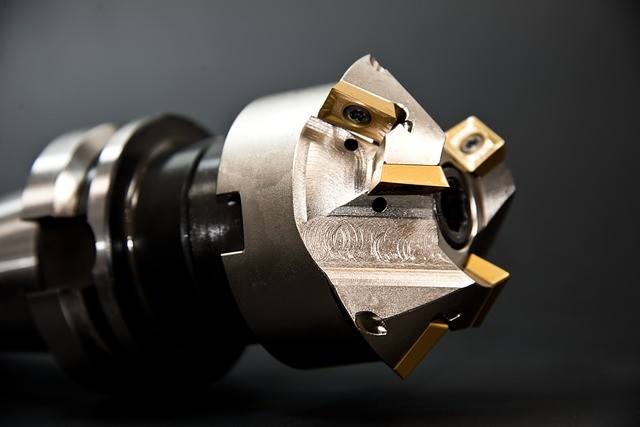
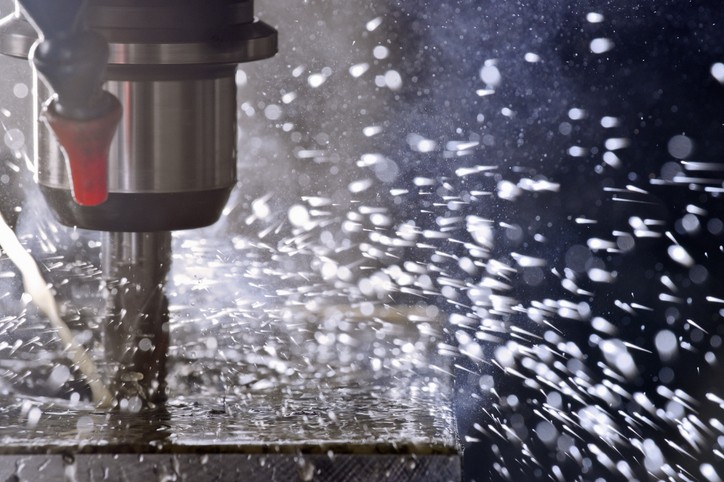
Precision machining is a subtractive manufacturing process that uses computer-controlled tools to produce components with extremely tight tolerances. Think of it as CNC (Computer Numerical Control) machining taken to its highest level of accuracy. The process removes material from a workpiece to achieve exact dimensions, surface finishes, and geometric forms that meet strict design specifications.
It’s especially critical in aerospace, defense, and medical manufacturing, where being even a fraction off can compromise performance or safety.
Why These Factors Define Manufacturing Success
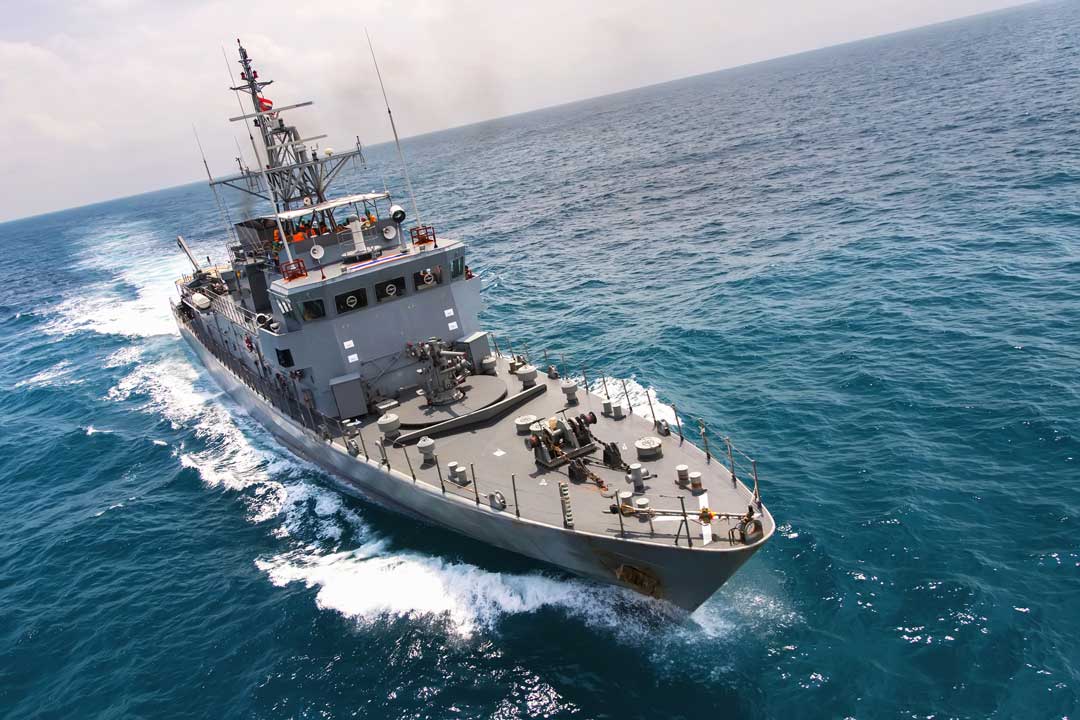
In military fabrication and defense contracts, there’s no such thing as “close enough.” Components must hit their specs every single time, across every production run. That kind of consistency isn’t accidental. It’s the result of disciplined, systematic control over the factors covered below.
Manufacturers that get this right don’t just build better parts. They build better businesses. According to performance data from precision manufacturers that have systematically addressed these five factors, premium pricing power can increase by 15 to 25%, and customer retention rates improve significantly in high-stakes industries.
The 5 Critical Factors in Precision Machining
1. Environmental Control
Temperature stability within plus or minus 1 degree Celsius throughout production areas has become the baseline for serious precision work. Every degree of temperature fluctuation introduces approximately 0.000012 inches (0.3 µm) of dimensional change per inch of steel fabrication stock. On larger components, that adds up fast.
Top-performing shops don’t just maintain controlled environments. They monitor them continuously. Humidity, vibration, and air pressure all affect dimensional consistency. If your shop floor feels like a regular industrial space, you’re likely leaving accuracy on the table.
2. Machine Calibration
Regular calibration using laser interferometry is not a maintenance expense. It’s a profit-protection investment. When calibration intervals stretch from monthly to quarterly to “whenever we notice a problem,” tolerance consistency suffers immediately.
Brass welding and other precision joining operations expose calibration gaps quickly. If your machine’s baseline isn’t accurate, no amount of programming skill will compensate. The numbers will drift, and your scrap rate will tell the story before your quality team does.
3. Toolpath Strategy
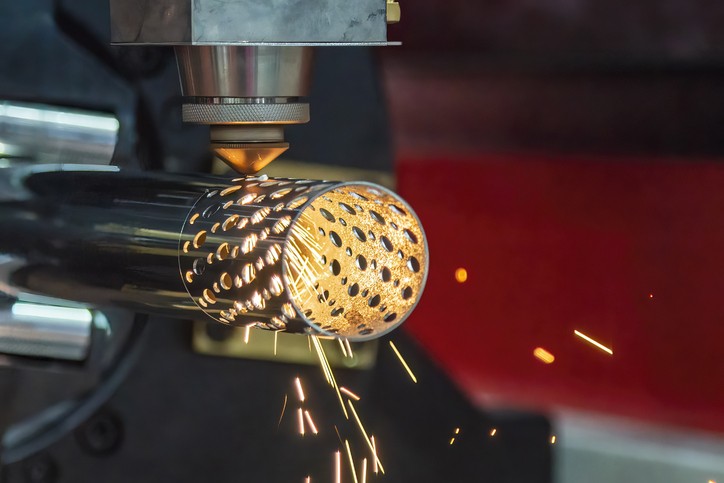
The difference between basic and advanced toolpath programming often determines whether tolerances stay consistent throughout a production run. Experienced machinists know that aluminum laser cutting and similar high-speed operations require toolpath planning that accounts for tool deflection, chip load, and heat generation at the cutting edge.
Advanced toolpath strategies reduce those variables. They also shorten cycle times, which directly improves cost per part. Getting this right requires both machine knowledge and engineering depth, not just CAM software.
4. Material Understanding
Every material behaves differently under cutting forces, heat, and stress. Aluminum’s high thermal expansion coefficient means heat management becomes critical. Titanium’s poor thermal conductivity concentrates heat at the cutting edge. When processes are tailored to material properties, tolerance consistency improves dramatically.
This understanding extends across every material in a shop’s portfolio, from specialty alloys used in military enclosures to structural metals used in everyday industrial applications. Shops that treat every material the same way rarely hit tight tolerances with consistency.
5. Measurement Mastery
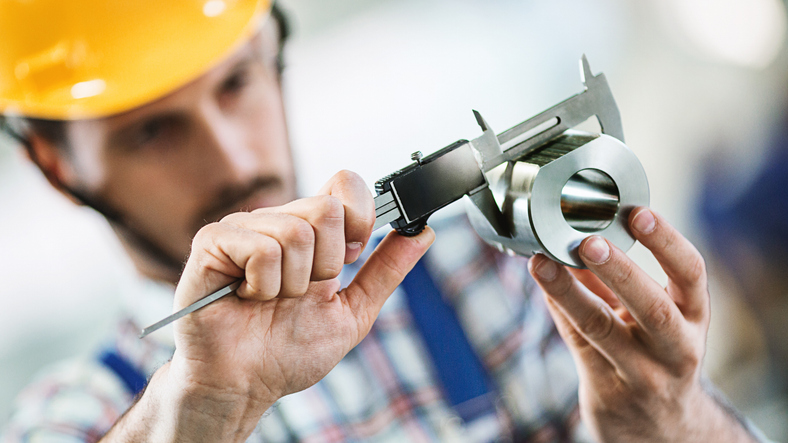
You can’t control what you can’t measure. Investing in advanced metrology equipment and training operators in proper measurement technique often delivers the fastest ROI in precision manufacturing.
Many shops machine to extremely tight tolerances but lack the verification capability to confirm their work is accurate. Custom sheet metal bending and formed components illustrate this point well. Without the right measurement tools, even well-machined parts can ship out of spec and create costly downstream problems.
How NAMF Applies These Standards
At NAMF, we’ve built our entire operation around these five factors. With over 60 years of experience serving aerospace and defense clients, we’ve seen firsthand what happens when any one of these elements is neglected.
Our facilities maintain climate-controlled environments and operate on rigorous calibration schedules. Our machinists understand the material science behind the parts they produce. Dip brazing operations, for example, require exact temperature management both during machining and during the joining process itself. If dimensional control isn’t achieved upstream, brazed assemblies won’t meet fit-up tolerances, and the entire part is compromised.
Our CNC milling capabilities span horizontal, vertical, and 5-axis configurations, giving us the flexibility to choose the most efficient and accurate approach for each job. We hold AS9100D certification and are actively pursuing NADCAP accreditation to back our capabilities with documented, auditable proof.
Clients including Airbus, Northrop Grumman, and GE Aviation trust NAMF because we don’t just meet specs. We consistently hit them, run after run, part after part.
Precision Machining That Performs When It Matters
Mastering precision machining isn’t a one-time project. It’s an ongoing commitment to environmental control, calibration discipline, intelligent toolpath programming, material knowledge, and measurement rigor. Manufacturers who internalize all five of these factors will continue to win the most demanding contracts in defense and aerospace.
If your current supplier is struggling to hit tolerances or producing inconsistent results, the issue likely traces back to one or more of these factors. Addressing them requires investment, but the payoff in pricing power, customer loyalty, and reduced scrap is both measurable and lasting.
Ready to Work With a Precision Machining Partner You Can Trust?
NAMF has delivered precision-critical components to aerospace and defense leaders for over 60 years. Our climate-controlled facilities, AS9100D-certified processes, and experienced machining team are ready to take on your most demanding tolerances.