Key Takeaways
- NADCAP approved platers have passed the most rigorous accreditation process in aerospace and defense manufacturing, making them the required choice for most prime contractors.
- Skipping NADCAP certified suppliers can result in project rejection, costly delays, and compliance failures that far outweigh any short-term cost savings.
- NAMF provides NADCAP approved plating as part of a complete, single-source solution with one point of contact across every step of your project.
If you supply parts for the defense or aerospace industry, the certifications on your suppliers’ walls matter more than you might think. Choosing NADCAP approved platers is not just a best practice. For many prime contractors, it is a requirement.
NADCAP stands for the National Aerospace and Defense Contractors Accreditation Program. To earn this accreditation, companies must pass a Performance Review Institute (PRI) audit conducted by an approved auditor. That auditor checks every step of the company’s process to confirm it meets or exceeds standards set through consensus by technical experts and government representatives.
It is not easy to become NADCAP accredited. But companies that commit to it send a clear signal: they are serious about quality.
What NADCAP Approved Platers Actually Go Through
The accreditation process is built on accountability. Every plating process, from chemical conversion coating to anodizing, gets scrutinized. This includes how work orders are received, how materials are traced, and how nonconformances are documented and resolved.
Companies like NAMF that offer alodine coating as part of their process must meet Mil-Spec Mil-DTL-5541 standards. That is not a checkbox. It means every part that leaves the facility has been processed in a fully controlled, auditable environment.
Before NADCAP existed, aerospace prime contractors had to audit their own suppliers against their own internal requirements. The same supplier could be audited by five different customers for the same processes. It was expensive, time-consuming, and added no real value to the supply chain. NADCAP replaced that redundancy with one standardized, industry-managed evaluation.
The Numbers That Make the Case
The data supports why NADCAP approval has become the baseline, not the bonus, in this industry.
According to NADCAP, 85% of accredited companies report a measurable improvement in quality after earning their accreditation. That is not a marketing claim. It is feedback from the companies that went through the process.
Additionally, more than two-thirds of aerospace industry representatives believe NADCAP directly contributes to the overall safety record of the industry. When you are buying parts that end up in military aircraft or naval systems, those numbers matter.
Most prime contractors in defense and aerospace simply will not work with suppliers that are not NADCAP approved. It is not personal. It is practical. Working with pre-approved vendors keeps the entire manufacturing process faster and more reliable. Your fabrication and machining supplier needs to meet that standard from day one.
Why You Cannot Afford to Skip It
Some procurement teams look at non-certified suppliers as a way to cut costs. In most cases, that approach backfires.
Without NADCAP approved platers in your supply chain, you risk rejection from prime contractors, project delays while you scramble to find compliant vendors, and non-conformances that ripple across the entire program. The short-term savings rarely hold up against those consequences.
This is especially true when your project spans multiple processes. A single component might require cutting, forming, welding, plating, and finishing before it is ready. Your steel fabrication services provider, your plating shop, and your machining partner all need to meet the same compliance standard. When one link breaks, the whole chain slows down.

Full-Service Manufacturing at NAMF Includes NADCAP Approved Plating
This is where the New Age companies stand apart from the typical fabrication shop.
NAMF does not just offer NADCAP approved plating. We offer it as part of a complete, single-source metal fabrication solution. You get one point of contact for every step of your project, from raw material to finished, ready-to-ship product.
Our capabilities include laser cutting, CNC milling, dip brazing, welding, chemical conversion coating, and NADCAP approved plating. Everything happens in-house, at our facilities in Fairfield, NJ and Ronkonkoma, NY. That vertical integration eliminates the coordination headaches that come from moving parts between multiple vendors, keeps quality control consistent across every step, and keeps your project on schedule.
How Our Capabilities Support Defense and Aerospace Programs
Whether your work involves enclosures, assemblies, or structural components, NAMF brings the equipment and certifications to handle it.
For teams in the defense sector specifically, we bring decades of hands-on experience in military fabrication. That work requires more than standard certifications. It requires a deep understanding of MIL-SPEC requirements, tight tolerances, and the kind of accountability that comes with knowing your parts end up in mission-critical systems.
Our military machining capabilities support that work directly. Five-axis CNC milling, horizontal milling, and precision turning all happen under the same roof as our NADCAP approved plating. You are not waiting for one vendor to finish before the next one starts.
When your program demands precise machining and manufacturing to exacting specifications, that kind of integrated workflow is not a convenience. It is what makes your timeline achievable.

Choosing the Right Machining Process for Your Components
Understanding the machining approach behind your parts helps you ask the right questions and make smarter procurement decisions.
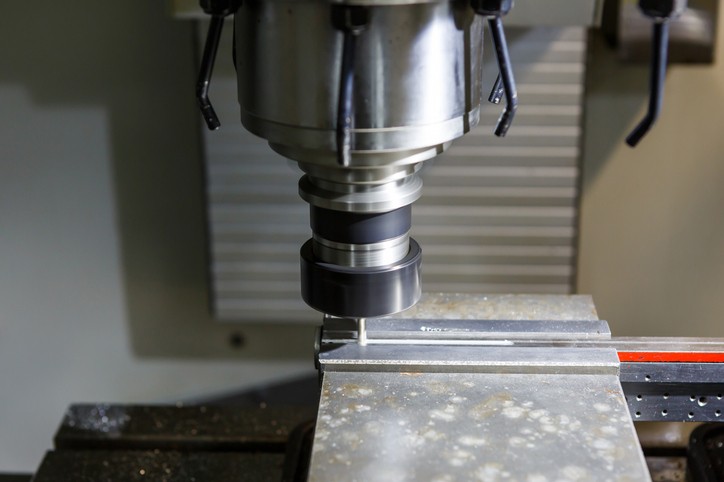
The choice between 3 axis vs 5 axis milling has a direct impact on cost and cycle time. Five-axis machining handles complex geometries in a single setup, reducing fixturing time and improving part accuracy. For simpler components, three-axis milling is often more cost-effective. Our team helps you identify the right approach based on your design.
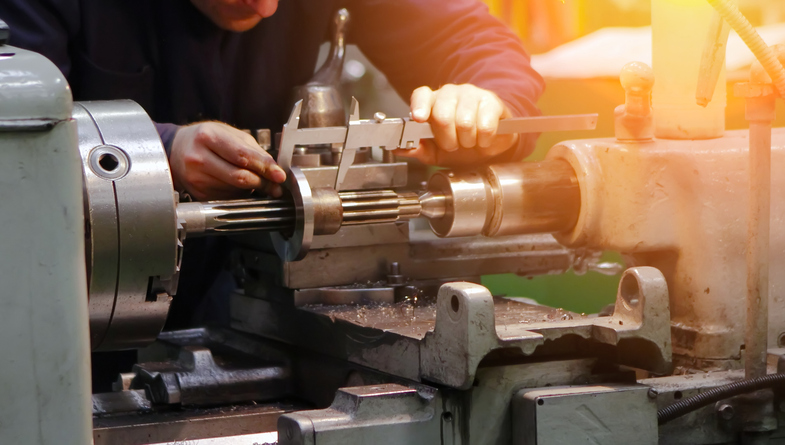
Similarly, the difference between a CNC mill vs lathe affects how your part geometry gets produced. Mills approach the material from multiple directions; lathes rotate the workpiece against a stationary cutting tool. Both have their place in precision defense manufacturing, and we use whichever method best suits your design specs.
Protecting Electronics With Certified Plating Processes
Defense electronics require protection that goes beyond corrosion resistance. They need to be EMI shielded to function reliably in high-interference environments. NAMF’s NADCAP approved plating processes support EMI shielding requirements as part of our broader dip brazing and enclosure manufacturing capabilities.
Our dip-brazed enclosures create hermetically sealed joints that provide inherent EMI protection. Combined with certified plating, these assemblies meet the demanding performance requirements of avionics, radar systems, and ground electronics. When a project also calls for brass CNC milling, our team handles those specs with the same precision we apply to aluminum and stainless steel.
One Source. Every Certification. No Vendor Juggling.
At NAMF, NADCAP approved plating is just one piece of what we offer. From precision CNC machining and dip brazing to sheet metal fabrication, welding, and chemical conversion coating, we handle the full scope of your project under one roof.
Our team works with major defense and aerospace contractors across the country. If your program requires certified, full-service manufacturing with zero coordination overhead, we are ready to talk.