- The Hidden Cost of Multi-Vendor Coordination
- How Single-Source CNC Cutting Services Deliver Better Results
- The Technology Advantage: Fiber Optic Laser Cutting
- The Compliance Framework That Protects Your Program
- How Dip Brazing Creates Ruggedized Enclosures
- The Real Economics of Vertical Integration
- What to Look for in a Manufacturing Partner
- The Path Forward for Defense and Aerospace Manufacturing
- Frequently Asked Questions
Key Takeaways
- Single-source manufacturing eliminates coordination delays and quality gaps that occur when managing multiple vendors across different facilities
- Integrated capabilities like fiber optic laser cutting and 5-axis CNC machining deliver tighter tolerances and faster production for mission-critical components
- Unified compliance systems ensure consistent quality standards across all operations, protecting your program from supply chain vulnerabilities
The aerospace and defense market continues to grow, but that growth brings pressure. Production backlogs stretch years for commercial airframes. Raw material costs disrupt manufacturing schedules. Production timelines face delays because critical components aren’t available when needed.
This isn’t a temporary bottleneck. The supply chain model that worked for decades is breaking under the weight of complexity, regulatory demands, and the sheer volume of coordination required to deliver mission-critical components.
We’ve watched defense contractors and aerospace manufacturers wrestle with this reality. They’re managing multiple vendors, syncing production stages across different facilities, and trying to maintain quality control when each supplier operates independently.
The question isn’t whether the industry will adapt. It’s how fast manufacturers can shift to models that deliver reliability, speed, and compliance without sacrificing precision.
The Hidden Cost of Multi-Vendor Coordination
You know the drill. Your project needs CNC cutting services from one supplier, machining from another, welding from a third, and finishing from a fourth.
Each handoff creates risk.
Communication gaps emerge between vendors who don’t share the same quality systems. Production delays at one facility cascade through your entire timeline. And when a component fails inspection, identifying which supplier caused the issue becomes a forensic investigation.
The numbers tell the story. Companies coordinating multiple suppliers spend significantly more time on project management. Quality issues increase when accountability spreads across different organizations with different standards.
Defense and aerospace work doesn’t tolerate these inefficiencies. When you’re building components for systems where failure isn’t an option, every additional handoff multiplies your exposure to problems.
The traditional approach of splitting work across specialized vendors made sense when projects were simpler and timelines were flexible. Neither of those conditions exists anymore.
How Single-Source CNC Cutting Services Deliver Better Results
Single-source manufacturing means one partner controls every stage of your component’s journey.
From raw material to finished assembly, the same quality system governs every operation. The same engineering team reviews your designs for manufacturability. The same facility handles laser cutting, CNC machining, welding, and finishing.
This approach eliminates the coordination tax you pay when managing multiple vendors.
When we handle a project in-house, our engineering team can optimize designs before production begins. If we identify a potential issue during CNC machining, we adjust the approach immediately because the same people who cut the material are connected to the team doing the finishing work.
Communication happens in real time, not through email chains spanning multiple companies.
Quality control becomes consistent because every operation follows the same standards. When you’re working toward AS9100D certification and ITAR compliance, having a unified quality management system isn’t just convenient—it’s essential.
The efficiency gains are measurable. Projects move faster when you’re not waiting for one vendor to ship components to another vendor. Costs decrease when you eliminate redundant shipping, handling, and administrative overhead.
The Technology Advantage: Fiber Optic Laser Cutting
Laser cutting technology has evolved significantly, and the difference matters for defense and aerospace applications.
Fiber optic laser systems cut faster than traditional CO₂ lasers at equivalent power levels. The beam quality is superior, delivering cleaner cuts and tighter tolerances.
Fiber lasers achieve higher energy efficiency than CO₂ systems. This means more consistent performance and less thermal distortion in your materials.
Key components in fiber laser systems have extended service lives. For high-volume production, this reliability directly impacts your ability to meet delivery commitments. Precision matters when you’re fabricating ruggedized enclosures that need to perform in extreme environments. Our CNC cutting services support multiple materials, ensuring consistent results for defense applications.
Temperature stability and vibrational resistance in fiber laser systems mean you get consistent results across long production runs. When you’re manufacturing to MIL-SPEC standards, that consistency isn’t optional.
Why Integrated CNC Capabilities Matter for Complex Geometries
Modern aerospace and defense components demand precision that traditional 3-axis machining can’t deliver efficiently.
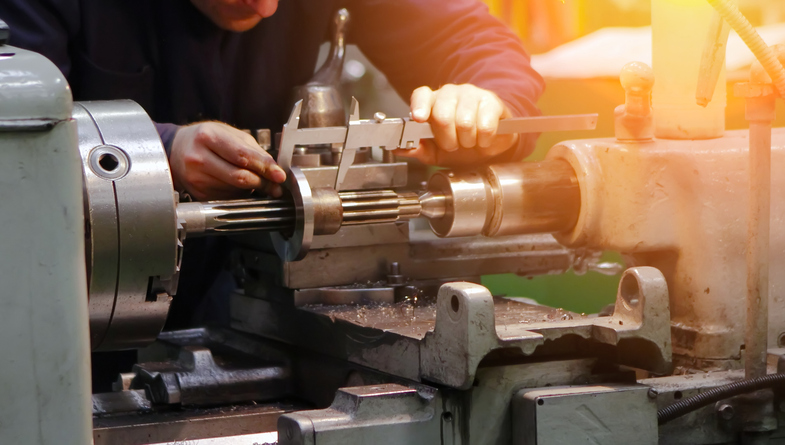
5-axis CNC machining enables us to produce complex geometries in a single setup. Understanding the difference between 3 axis vs 5 axis milling helps explain why modern defense work demands multi-axis capabilities. This reduces cumulative error and enables faster production without constantly reconfiguring fixtures and tools.
Demand for CNC machine tools continues to grow, reflecting the increasing need for the precision and repeatability that CNC systems deliver.
Industries like aerospace rely on multi-axis CNC machines because the tolerances are non-negotiable. When you’re machining components that integrate into critical defense systems, achieving specifications isn’t a goal—it’s the baseline.
We’ve integrated Industrial Internet of Things (IIoT) capabilities into our CNC operations. Real-time monitoring catches potential issues before they become quality problems. Predictive maintenance prevents unexpected downtime that would delay your project.
The practical benefit: you get parts that meet specifications the first time, delivered on schedule.
The Compliance Framework That Protects Your Program
Working in defense and aerospace means navigating a complex regulatory environment.
ITAR compliance governs how defense-related materials and information are handled. AS9100D certification demonstrates that your quality management system meets aerospace industry standards. NADCAP accreditation validates specific special processes.
When you work with multiple vendors, you’re trusting that each one maintains appropriate certifications and follows required protocols. One weak link in that chain can compromise your entire program.
Single-source manufacturing with integrated compliance systems gives you visibility and control. We maintain NADCAP, NAVSEA, and ISO accreditations across all our operations. Our welding certifications meet AWS D17.1 and AWS D1.2 standards. Chemical conversion coating adheres to Mil-Spec Mil-DTL 5541.
This isn’t about checking boxes. These certifications reflect the quality systems and processes that ensure your components meet the exacting requirements of defense and aerospace applications.
The compliance framework extends to cybersecurity. With NIST and CMMC standards becoming more stringent, working with partners who understand and implement these requirements protects your program from supply chain vulnerabilities.
How Dip Brazing Creates Ruggedized Enclosures
Some applications demand enclosures that can withstand extreme conditions. Dip brazing delivers structural integrity and thermal conductivity that other joining methods can’t match.
The process involves immersing metal assemblies in molten salt, creating joints that are stronger than the base material. For aluminum assemblies used in military and aerospace applications, dip brazing provides the reliability you need when failure isn’t acceptable.
We hold NAVSEA approval for dip brazing to Navy specifications. This capability is relatively rare in the industry, which is why defense contractors working on ruggedized electronics enclosures and thermal management systems come to us. Many manufacturers ask about the difference between brazing and welding when evaluating joining methods for their assemblies.
The advantage of having dip brazing in-house with our other fabrication capabilities: we can design and optimize your enclosure for the brazing process. This integrated approach prevents the design compromises that happen when fabrication and joining are handled separately.
Dip-brazed enclosures provide electromagnetic shielding, environmental protection, and thermal management in a single assembly. When you’re building systems for harsh environments, these properties aren’t luxuries—they’re requirements.
The Real Economics of Vertical Integration
Cost-effective manufacturing isn’t about finding the cheapest vendor for each operation. It’s about optimizing the entire production process to deliver value.
Vertical integration reduces your total cost of ownership in ways that aren’t immediately obvious. Vertical milling services within an integrated facility eliminate redundant shipping and handling between vendors. You reduce administrative overhead from managing multiple purchase orders and quality agreements. You avoid the markup that each vendor adds to cover their own coordination costs.
Timeline compression has financial value. When we can move your project from design review through finished assembly without external handoffs, you get to market faster. In defense and aerospace, where program timelines are measured in years, shaving weeks or months off production schedules creates a competitive advantage.
Quality costs decrease when the same team handles every operation. First Article Inspection (FAI) happens within a unified quality system. When we identify opportunities for Design for Manufacturability (DFM) improvements, we can implement them immediately because we control the entire process. This approach benefits military fabrication projects where specifications are rigid and quality is non-negotiable.
A defect caught during in-house processing costs far less than a defect discovered after a component has moved through multiple vendors and reached final assembly.
What to Look for in a Manufacturing Partner
Choosing a manufacturing partner for defense and aerospace work requires evaluating capabilities beyond basic fabrication.
Start with certifications. AS9100D, NADCAP, and relevant ISO standards aren’t just credentials—they indicate the quality management systems and processes that protect your program. ITAR registration is non-negotiable for defense work.
Evaluate their actual production capabilities. Can they handle your materials? Do they have the equipment to meet your tolerances? More importantly, do they have the engineering expertise to optimize your designs for manufacturability?
Look at their track record with companies similar to yours. Evaluate how metal fabrication companies like ours maintain approvals from major contractors such as BAE and Lockheed Martin through consistent delivery of precision components that meet exacting specifications. That approval process is rigorous, and it validates our capabilities.
Consider their capacity for growth. We operate facilities in Fairfield, NJ, and Ronkonkoma, NY, with room to scale. When your program expands, you need a partner who can grow with you without compromising quality or timelines.
Ask about their approach to project management. Single-source manufacturing only delivers value if the partner can actually coordinate all those operations effectively. You want a team that provides a single point of contact and takes ownership of your project from start to finish.
The Path Forward for Defense and Aerospace Manufacturing
The industry is at an inflection point. Traditional supply chain models are struggling under the combined pressure of increased demand, tighter tolerances, and more complex regulatory requirements.
Manufacturers who adapt will gain a competitive advantage. Those who continue managing fragmented supply chains will face mounting costs, quality issues, and timeline delays.
The shift toward single-source manufacturing isn’t about putting all your eggs in one basket. It’s about working with partners who have the integrated capabilities, quality systems, and engineering expertise to deliver mission-critical components reliably.
We’ve built our business around this model since 1979. Our investment in advanced technologies like fiber optic laser cutting and 5-axis CNC machining positions us to meet the evolving demands of defense and aerospace applications.
The future belongs to manufacturers who can deliver precision, reliability, and compliance within compressed timelines. If you’re evaluating your supply chain strategy, the question isn’t whether to consolidate—it’s finding the right partner who can handle the complexity of your requirements.
Your components are too critical to accept anything less than complete control over quality, precision, and delivery. That’s what single-source manufacturing with integrated capabilities delivers.
Partner With a Single-Source Manufacturer
New Age Metal Fabricating delivers complete in-house capabilities—from laser cutting and CNC machining to dip brazing and finishing—with certifications including NADCAP, NAVSEA, and AS9100D preparation. Contact us to discuss how our integrated approach can streamline your supply chain.